Water Security in Lebanon: From Crisis to Opportunity
LAU’s School of Engineering hosted policymakers, engineers and faculty in a timely event that tackled challenges and possible solutions for the water sector as part of the Mounir Khatib Endowed Engineering Lecture Series.
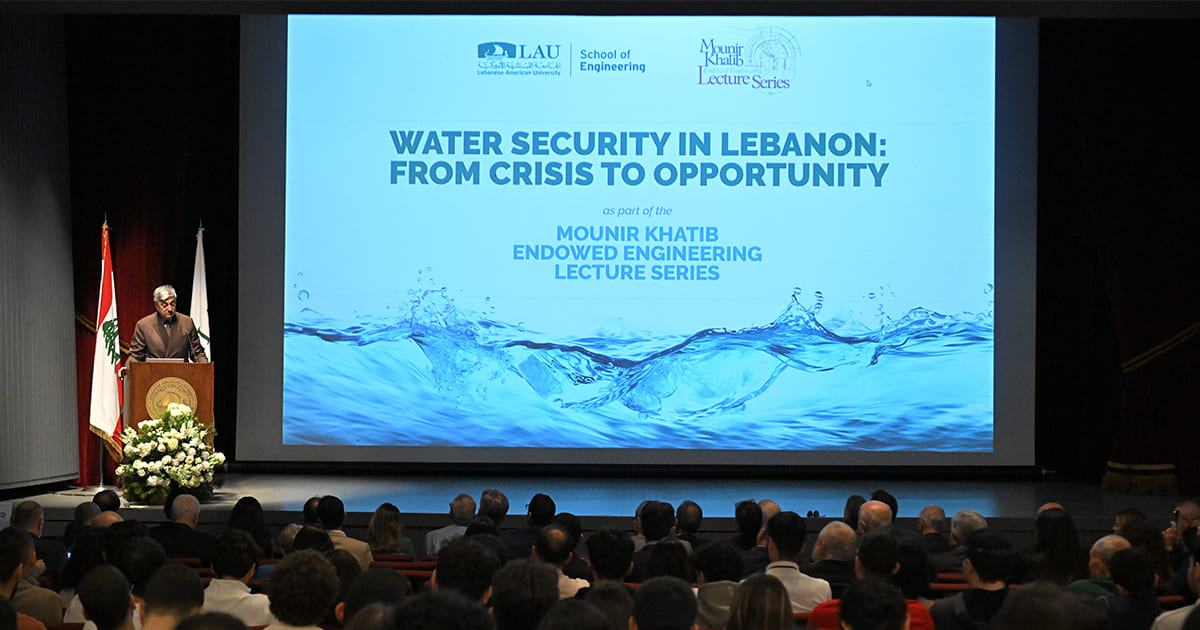
As the critical issue of water safety persists in the country, the LAU School of Engineering convened government representatives, policymakers, experts, faculty and students to explore the challenges in the sector, from climate change, water scarcity and contamination to an ongoing economic crisis, and identify opportunities that can be implemented within a national strategy.
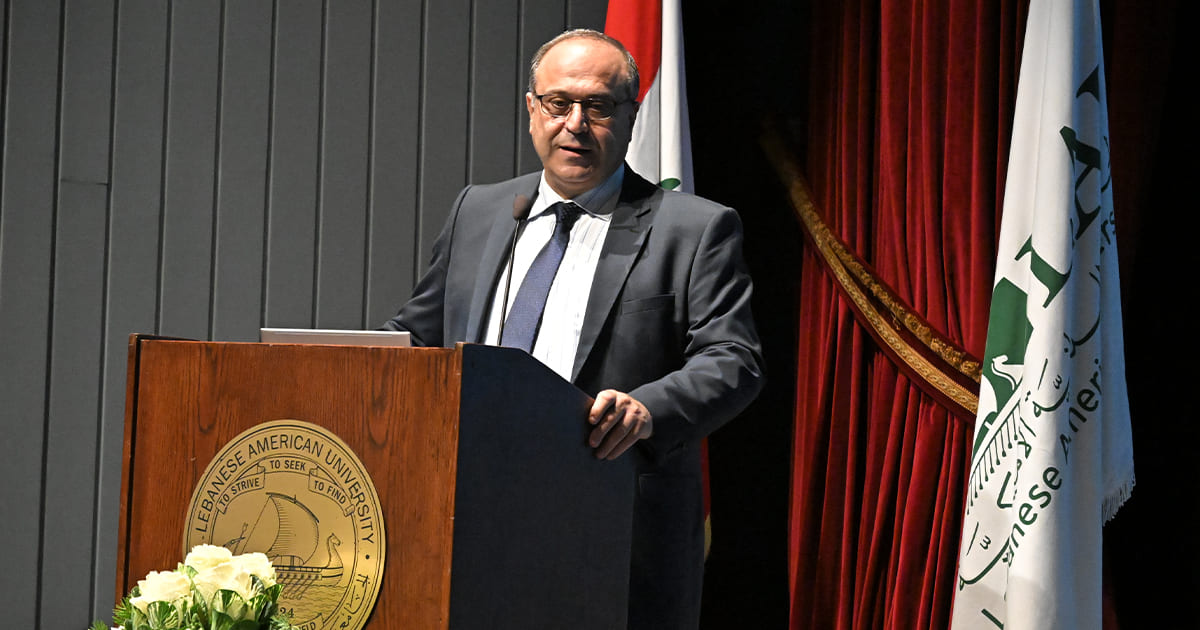
The event titled Water Security in Lebanon: From Crisis to Opportunity on the Beirut campus on November 27, 2025, was part of the Mounir Khatib Endowed Engineering Lecture Series, named after the late professor and pioneer Mounir Khatib for his contributions to the profession, noted Dr. Jean Chatila, LAU associate professor of civil engineering.
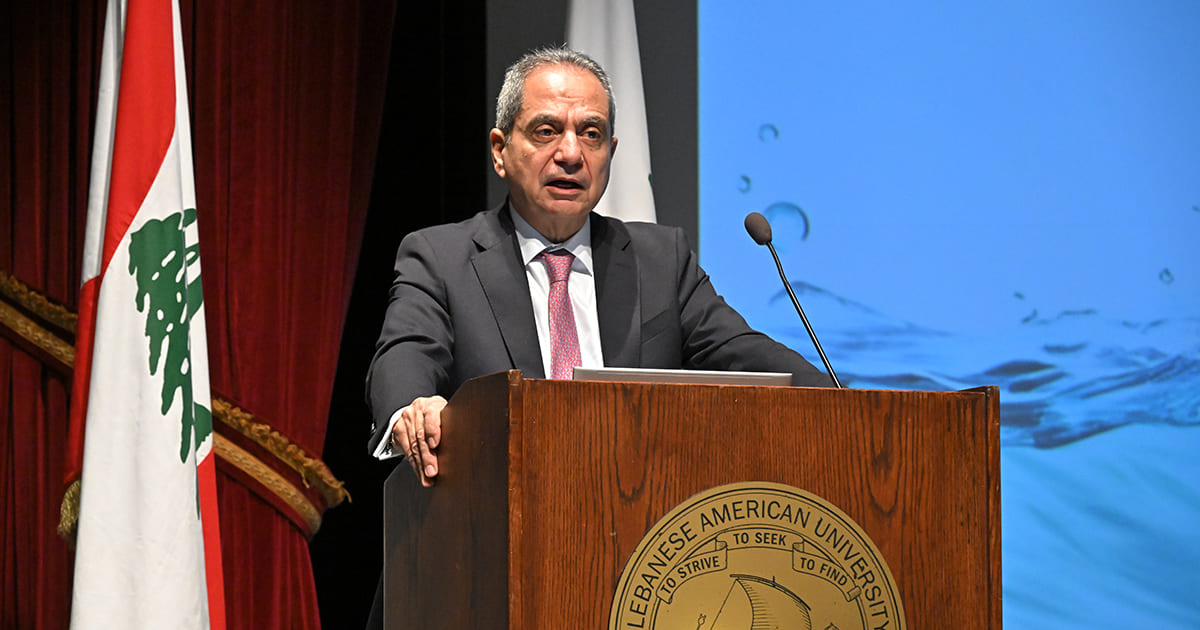
The conference was held under the patronage and in the presence of Lebanese Minister of Energy and Water Joe Saddi, who emphasized the importance of collaboration with universities and academic institutions as drivers of innovation and knowledge-based solutions.
“The water crisis in Lebanon is much more complex and difficult to solve than the electricity crisis,” said Saddi at the opening ceremony. “It’s a subject that lies at the core of our country’s resilience and future.”
The ministry was actively working to address current complex challenges, he added, including enhancing water storage capacity by prioritizing hill lakes, solving the problem of non-revenue water, developing a central water information system, and securing strategic infrastructure investments.
Commenting on the conference’s theme, Saddi noted that despite the complexity of the water sector crisis, there are still opportunities to “transform things and shape them,” based on scientific knowledge, institutional reform and innovative solutions.
“If we are to build a resilient sector, institutions such as LAU, but also AUB, USJ, the Lebanese University and others, should be not only centers of learning, but also engines of research, innovation and national problem solving,” he said, calling for increased collaboration with the academic community.
To that end, he added, the ministry will involve academic institutions such as LAU in the process of updating the national water strategy to provide the scientific knowledge that can inform decision-making.
“By engaging universities, we can ensure that our future is built on knowledge and facts, not on opinions and politics,” he explained. “What we now need is sustained collaboration between government and academia, and we are counting on [LAU] to be part of that journey.”
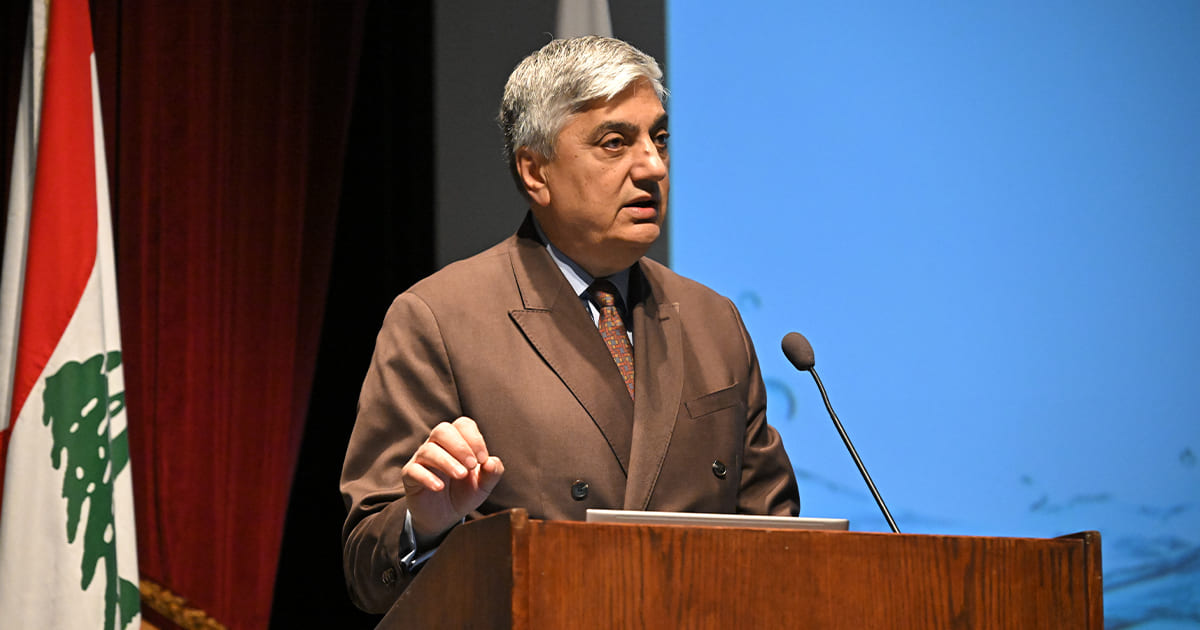
In his opening remarks, LAU President Chaouki T. Abdallah said that the panel discussion aimed to identify practical, scalable, and resilient engineering and policy solutions that would ensure equitable and sustainable access to water across Lebanon.
He called for a shift from “extraction to stewardship, and from short-term fixes to long-term planning” and for perceiving water as a national security asset that would pave the way to long-term stability and national prosperity.
“At LAU, we believe that Lebanon’s recovery will not be imported, but will be engineered. Our School of Engineering and Sustainability leadership are committed to advancing water security research, supporting national institutions with evidence and data, training engineers, scientists, and policymakers who build systems that are resilient, equitable, and future-ready,” he said.
“The presence of policymakers, practitioners, industry partners, and scholars in this room is not symbolic; it is the alignment required for national impact,” he added.
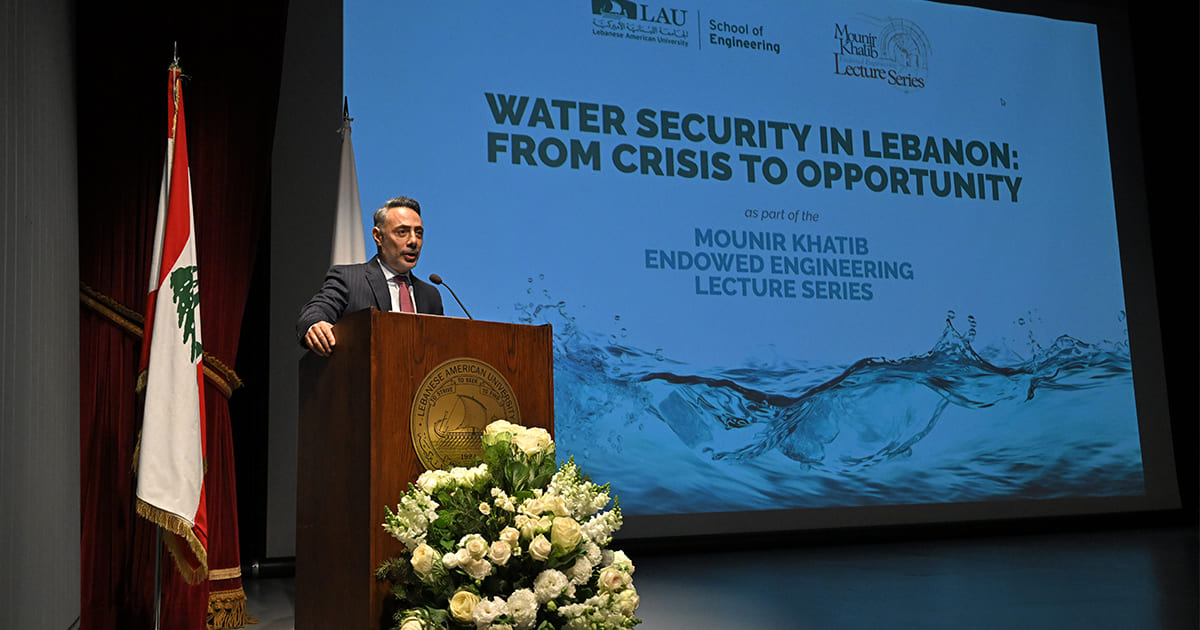
Recognizing water security as a national strategy and priority, Dean Michel Khoury noted that the School of Engineering is continuously working with public stakeholders, municipalities, and engineers to help shift the status quo from crisis to sustainable solutions.
“This is challenging, but despite all the challenges, we have opportunities to bring in new notions, ideas and collaborations, and definitely long-term structural reforms,” he said.
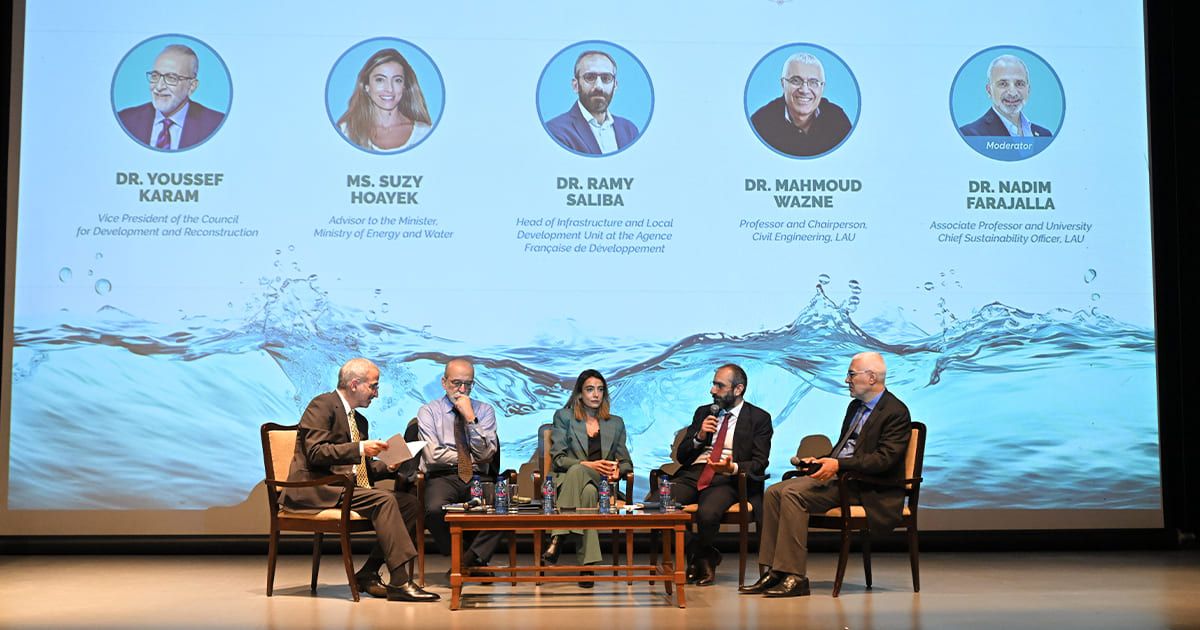
The panel brought together keynote speakers Suzy Hoayek, advisor to the minister of energy and water for the water sector and Dr. Youssef Karam, vice president of the Council for Development and Reconstruction, in addition to Dr. Mahmoud Wazne, LAU professor and chair of the Civil Engineering Department, Dr. Nadim Farajalla, LAU chief sustainability officer, and Dr. Ramy Saliba, head of the Infrastructure and Local Development Unit in Beirut at the Agence française de développement.
During the keynote session, Dr. Karam detailed the administrative and technical aspects of the water sector in Lebanon and the progress and challenges faced in projects that have been implemented.
Meanwhile, Hoayek expounded on the current situation of the water sector, mapping out challenges and gaps in various areas such as wastewater management, production, transmission and distribution, and the absence of water safety plans, while outlining the pillars and solutions proposed in the national water strategy.
Thanking the ministry for its engagement with academic institutions and the speakers for their participation, Dr. Khoury expressed hope that the panel discussion would inspire “a new path toward shaping new, tangible, and practical solutions.”


