AKSOB Students Put Human Judgment to the Test in the Age of AI
An interactive discussion challenged students to question technology, navigate ethical dilemmas, and rethink the skills needed to succeed in the workplace.
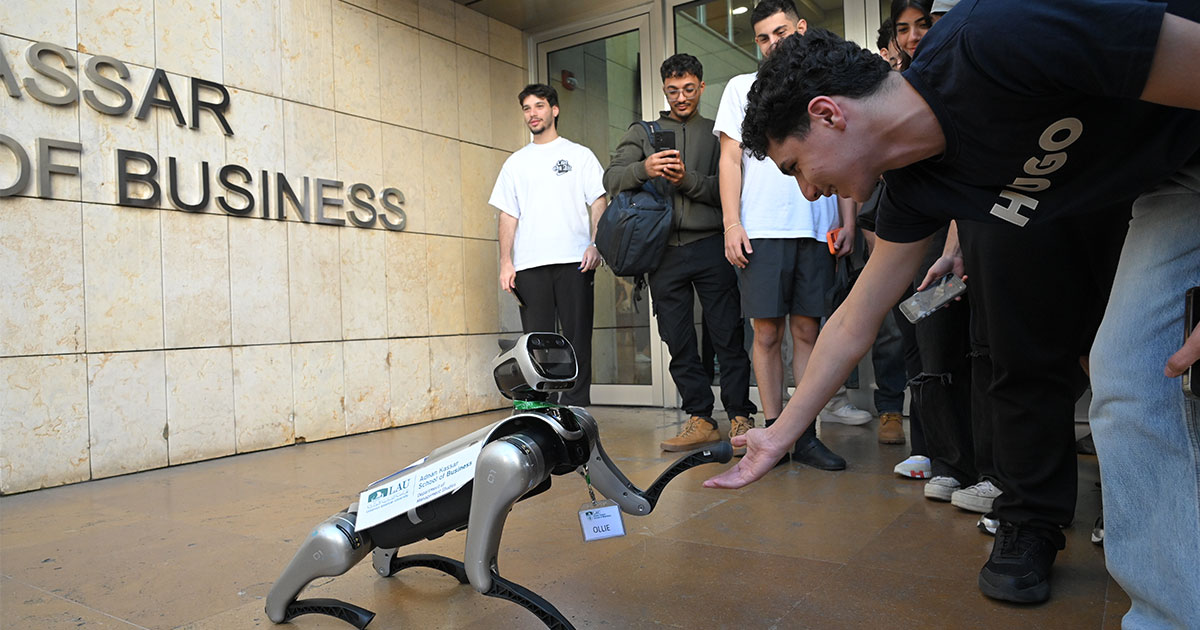
Would you trust artificial intelligence (AI) to recommend a job candidate? What about deciding whether an employee should be dismissed? These questions challenged students at the LAU Beirut campus on October 7, 2026, during an interactive discussion titled “Beyond Technology: The Human Side of AI in the Workplace,” organized by the Department of Management Studies at the Adnan Kassar School of Business (AKSOB), in collaboration with the Institute of Human Resources Management.
Moderated by Dr. Ali Takach of the Department of Management Studies, the event brought industry experts and students together to examine the opportunities, risks, and skills associated with an increasingly technology-driven workplace.
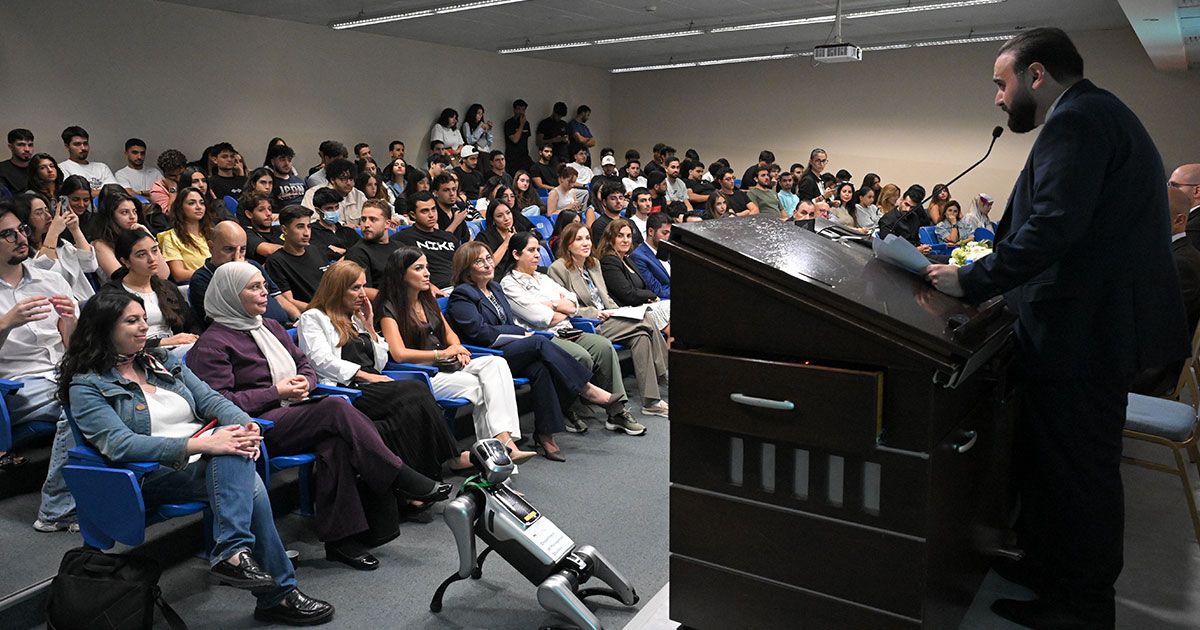
AKSOB Dean Dima Jamali said that preparing students to navigate these changes requires connecting academic learning with industry experience. “We do not want you to graduate only with a degree,” she said, stressing the importance of developing the skills and mindset needed to succeed professionally.
On this note, the dean announced an upcoming student competition with LinkedIn that will offer internship opportunities, potential employment with partner companies, and access to LinkedIn Premium.
Joining virtually, Ali Matar (BE ’01, MBA ’03), head of LinkedIn Middle East and Africa, addressed the challenges facing graduates entering a rapidly changing labor market. Drawing from LinkedIn data, he explained that professionals must continually update their skills to remain competitive.
Students were also challenged to question the reliability of information generated by AI. Abbas Kabalan, chief legal officer and co-founder of HAQQ Company, presented seemingly credible statistics about hotel guest satisfaction, then revealed the figures were fabricated.
“The convincing answer does not mean that the answer is true,” he said, demonstrating the importance of verifying information rather than accepting data at face value.
Illustrating with examples from his company’s experience in developing legal technology, Kabalan addressed the challenges involving inaccurate outputs, data protection, and unsuccessful business strategies, offering aspiring entrepreneurs lessons in adaptability and persistence.
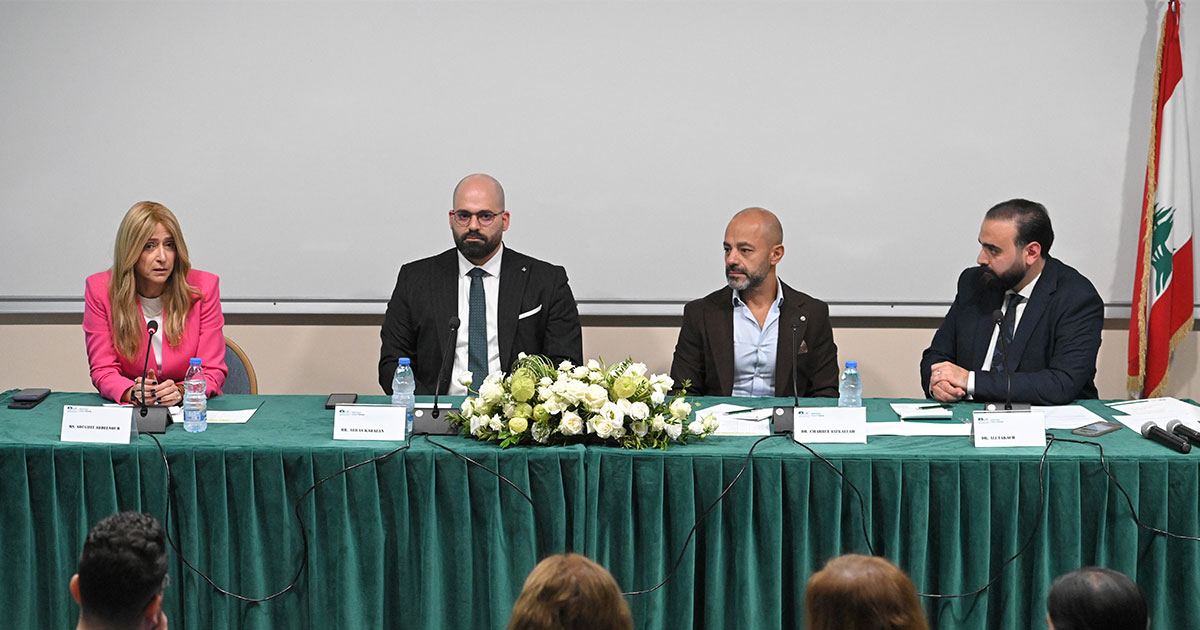
The question of accountability carried into healthcare, where Dr. Charbel Rizkallah (EMBA ’18), CEO of Hikma AI and former general manager of the Global Healthcare Business at Honeywell Europe, explained how automation can reduce administrative burdens and allow medical professionals to devote more time to patient care. However, he stressed that physicians must take on the sole responsibility for making medical decisions.
Students were challenged with an interactive exercise led by Soughit Abdennour, regional human resources lead at MSD for the Levant and North Africa Region and former regional human resources director at Deloitte. At first, they felt relatively comfortable in allowing AI to handle routine employee inquiries; however, the students grew increasingly cautious about using the technology to screen job applicants and rejected the prospect of having it make the call on staff dismissals.
“Human judgment will always be there,” Abdennour asserted.
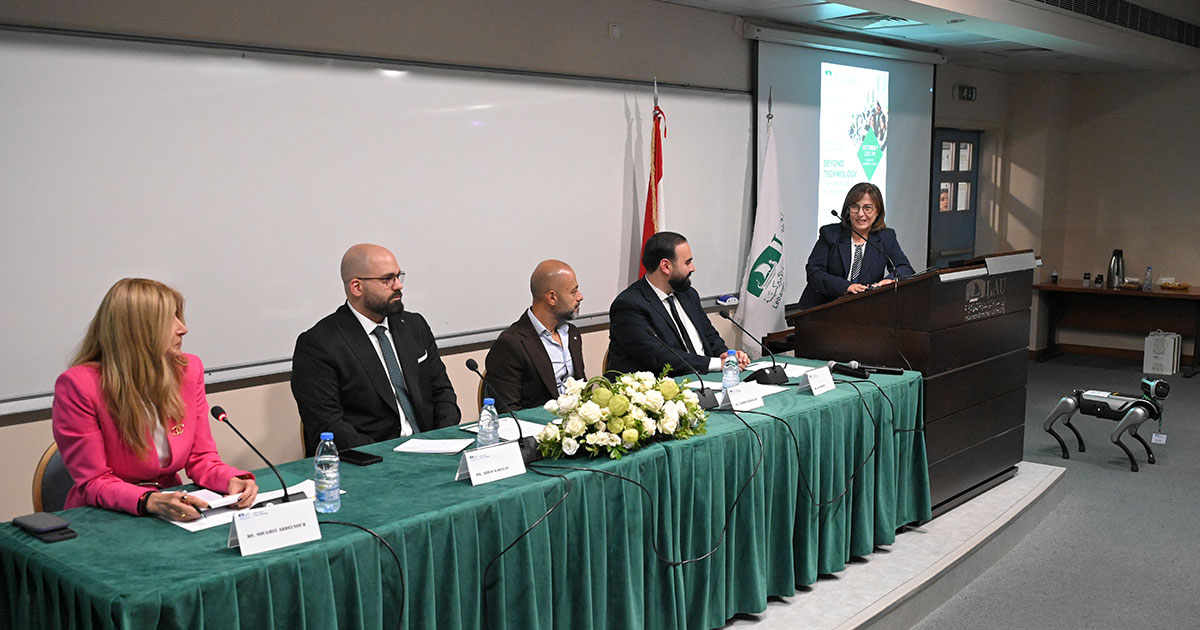
The exercise prompted students to consider how AI could strengthen professional judgment without replacing it, a distinction emphasized by Dr. Grace Dagher, Chairperson of the Department of Management Studies. “Human judgment, ethical reasoning, empathy, and critical thinking remain essential for responsible decision-making. The goal is not to replace humans with technology, but to empower humans through technology,” she said.
As Dr. Takach emphasized, “AI will become more intelligent. But technology does not decide what kind of future we create. People do.”


