Alumna Christelle Barakat Selected for a Prestigious Graduate Fellowship
LAU alumna Christelle Barakat (BA ‘20), an incoming Schwarzman Scholar, reflects on how the university’s interdisciplinary programs and mentorship prepared her to take on global leadership roles.
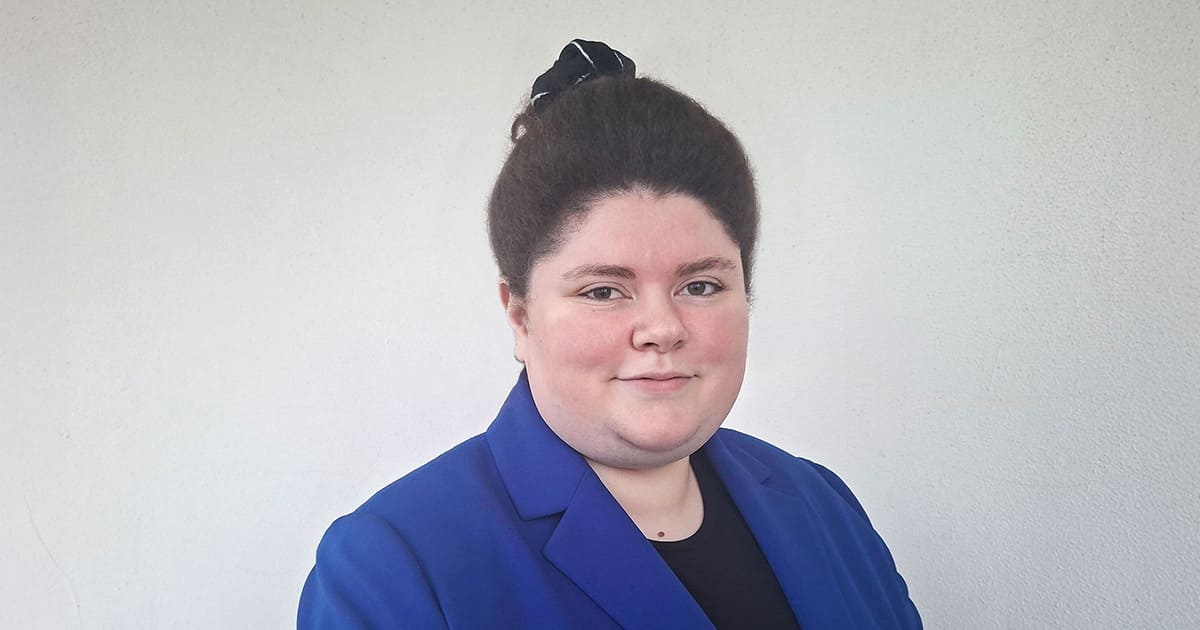
In 2022, Barakat completed a master’s degree in Peace and Conflict Studies at the University of North Carolina at Greensboro (UNCG) on a Fulbright Foreign Student Program scholarship, and most recently, was selected as a Schwarzman Scholar for the class of 2026–2027—a fully-funded, one-year master’s degree program in global affairs at Schwarzman College within Tsinghua University in China—reflecting a trajectory shaped by the values, discipline and ambition cultivated at LAU.
In this interview, she reveals what the fellowship means to her and how LAU helped her develop the skills and perspective to continue pursuing global leadership and impact.
You were recently selected for one of the most competitive graduate fellowships in the world, with only 150 scholars chosen from a record-high pool of applicants. What do you believe distinguished your pursuit and perspective in such a competitive selection process?
I am elated, honored, and grateful to have been selected for the Schwarzman Scholars Class of 2026–2027; even now, this still feels surreal to me. The Schwarzman Scholars selection process emphasizes leadership, intellect and character, and I believe it was these three qualities that distinguished my candidacy. I also believe that my achievements, clarity of purpose, persistence and sustained commitment to academic, personal and professional growth helped boost my profile.
I have always sought to improve through academic rigor, leadership experiences and service, guided by a sense of purpose and a strong moral compass. This growth was a result of sleepless nights, rejections, acceptances and opportunities I never imagined I would have, as well as opportunities I aspired to reach. Each experience provided more clarity about who I am and the impact that I hope to make.
At both academic institutions, LAU and UNCG, I was encouraged to explore various topics and ways of leading and serving, which helped me develop into a thoughtful and globally minded individual, aligned with Schwarzman Scholars’ mission. Self-reflection and long-term commitment to academic and professional excellence, leadership with purpose and service shaped my perspective throughout the application and selection processes.
How do you see the program’s focus on leadership, global affairs and China aligning with your academic interests in conflict analysis, disarmament, migration and gender studies?
I see a lot of alignment with the Schwarzman Scholars program, not just on an academic level, but also on the personal and professional level. I am passionate about conflict analysis, resolution, and disarmament in particular, and strive to integrate into those other interdisciplinary lenses, such as migration and gender studies. Schwarzman Scholars’ emphasis on leadership, global affairs and China uniquely and comprehensively frames these interconnected issues.
Having studied Political Science and International Affairs at LAU and Peace and Conflict Studies at UNCG, I perceive this fellowship as a natural continuation of these trajectories. Global affairs, particularly today, do not happen in isolation; they are interconnected, with developments in one country or region shaping security, migration and power dynamics elsewhere. I believe that Schwarzman Scholars’ curriculum reflects this reality and will equip me with the needed tools to engage more holistically with global challenges. I am also excited to experience first-hand how other individuals from other cultures define and implement leadership and to exchange our knowledge and perspectives.
The focus on China is likewise compelling. I think that more attention should be paid to China in Lebanon and the region, given its growing global influence and the potential balancing role it could play in this part of the world, particularly by linking sustainable development, disarmament, and conflict resolution.
Schwarzman Scholars offers a unique opportunity to engage with China through coursework and experiential learning. It allows for exposure to global experts, interactions with policymakers and practitioners, and an immersive experience in order to understand the nuances of Chinese domestic and foreign policies. This will enable me to assess China’s approach to disarmament, conflict resolution and sustainable development, as well as the possibility of an integrated approach between the three, and eventually contribute to research and policy discussions at the intersection of various issues.
How did your undergraduate experience at the LAU prepare you for a global program of this scale and ambition?
I owe a lot to both of my academic institutions—LAU and UNCG—for who I am today. But LAU was the foundation of my academic and professional careers. It was at LAU, with the support of scholarships and financial aid, that I was able to pursue the major and subjects that would lead me to the field of Peace and Conflict Studies. During my time at LAU, I also became interested in disarmament and built lasting mentorship with faculty members who continue to guide me, including my current professional supervisor.
LAU not only challenged me intellectually but also allowed me to explore leadership in theory and in practice. Participating in model simulation programs helped me hone my leadership skills in different roles. Today, I continue to teach conflict resolution and diplomacy skills to youth worldwide. Beyond the classroom, I was encouraged to be creative and take the initiative through student leadership positions, volunteering, internships, and research assistantships, which helped me develop into a well-rounded and globally engaged individual.
It was during my time at LAU that I was selected for two US Department of State programs: The Study of the US Institutes for Student Leaders on Religious Pluralism and Democracy and the Fulbright Foreign Student program.
Schwarzman Scholars builds upon this path through its rigorous coursework, mentorship, internships, language training, experiential learning and networking opportunities.
You graduated with high distinction, were part of the Honors Program, and completed three minors across interdisciplinary fields. How did this academic breadth help shape the global lens you bring to your work today?
This academic breadth is at the heart of the global and interdisciplinary perspectives I apply in my work today, as a researcher on public policies and in my other involvements. My major, three minors, and the Honors Program prepared me to approach complex issues from multiple angles, effectively studying the layers of each problem. This ensures that policy recommendations or attempts at conflict resolution reflect the complexity of the challenges.
This interdisciplinary combination also opened me up more to the world and increased my interest in different countries and cultures, including domestic affairs and their impact on foreign affairs. As a result, my academic experience shaped how I currently think, ask questions, and engage with multiple stakeholders and global issues.
Finally, for current LAU students who aspire to global fellowships and leadership roles, what lessons from your journey would you most want to share?
The most valuable lesson from my experience is to never give up. Take each rejection as an opportunity for reflection and growth. There are so many exceptional applicants around the world, and sometimes, the outcome depends on timing as much as merit.
Be authentic to who you are. Do not make the decision for or before the selection committee. Your task is to present yourself, your passions, and your desired area of focus. Do not worry if your interests seem unconventional. At one point during my application process, I hesitated about emphasizing disarmament because I thought it might be too controversial, so I toned it down; that was a big mistake.
Keep knocking on doors; some of the ones you may not expect can end up being some of the most amazing experiences you have.
Lastly, I may be Lebanon’s first Schwarzman Scholar, but I hope I am not the last. I hope that my achievement inspires other Lebanese individuals, especially girls and women, to aim high. The challenges may feel greater, and the context may feel bleaker than ever, but there is always hope, and you can and must create hope. You are enough, and your aspirations are valid.
This interview has been edited and condensed for the sake of clarity.


