LAU Executive Talk Explores Family Business Governance Across Three Generations
Women from the Fernand Hosri Group share lessons on leadership, professional merit, and the governance practices that help family enterprises thrive.
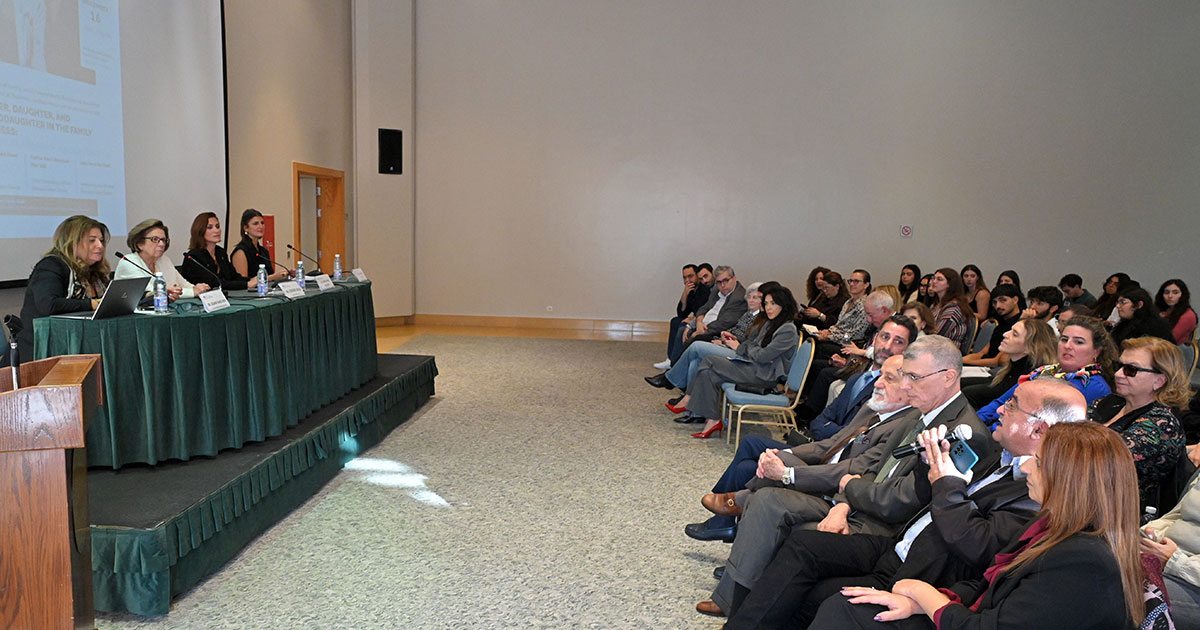
On November 16, 2026, they shared their experiences during Mother, Daughter, and Granddaughter in the Family Business: Legacy, Leadership, and Letting Go, an executive talk held at the LAU Byblos campus. The event was organized by the Institute of Family and Entrepreneurial Business at the Adnan Kassar School of Business (AKSOB) and moderated by its director, Dr. Josiane Fahed-Sreih, associate professor at AKSOB.
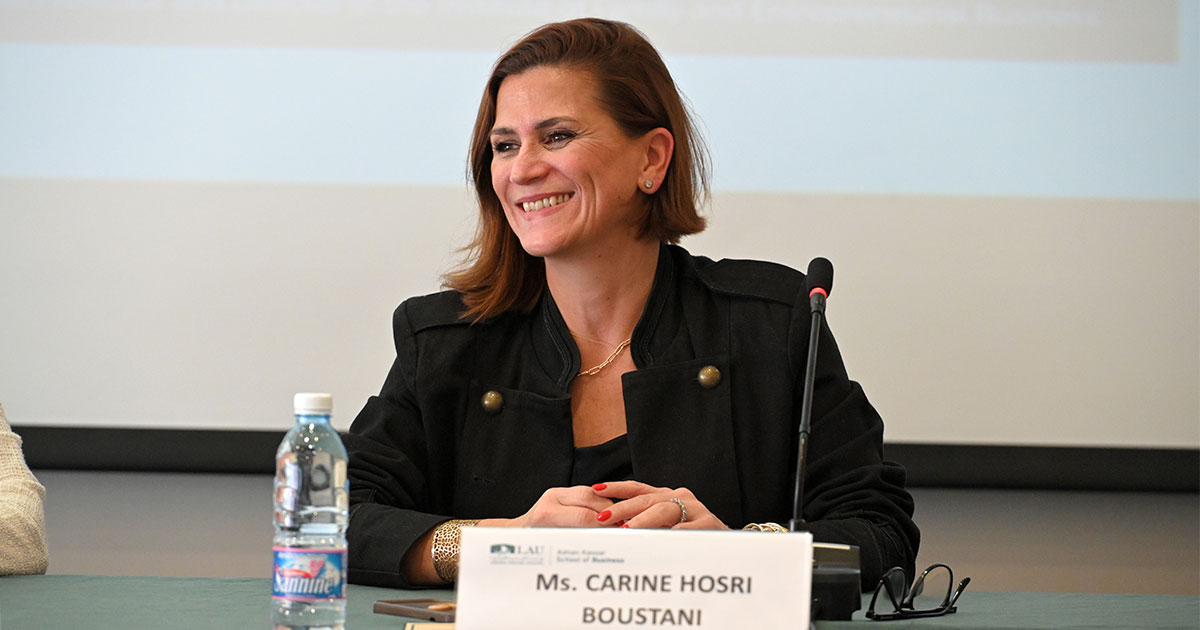
The discussion brought together Eugenie Saad Hosri (BA ’65), co-chair of Fernand Hosri Group; her daughter Carine Hosri Boustani (MBA ’07), chief operating officer, and a member of AKSOB’s Advisory Board; and granddaughter Leila Carolina Hosri, marketing and public relations lead.
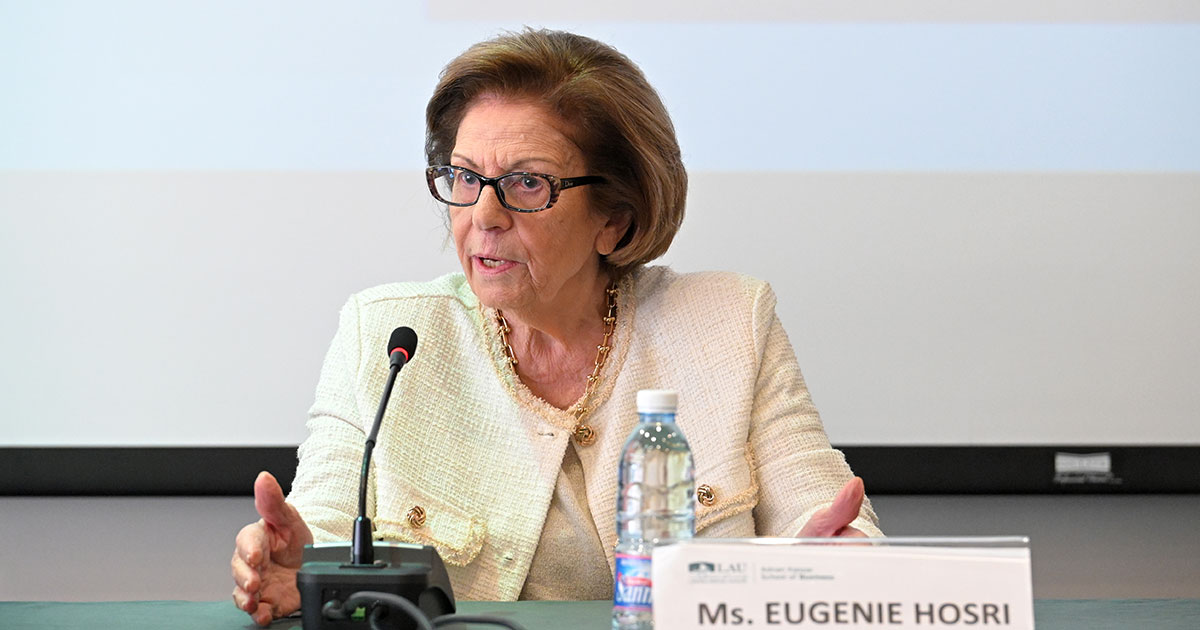 Balancing motherhood with the demands of leading a family business was particularly challenging for Eugenie Saad Hosri during Lebanon’s Civil War. With her husband working in Saudi Arabia, she raised three young children while managing business operations in an unpredictable environment that made long-term planning nearly impossible and forced her to navigate uncertainty one day at a time.
“During the crisis and war, we could not have a strategy,” she recalled, describing how the unpredictable security situation forced her to decide whether to open the offices, continue sales, and meet financial obligations, often without knowing what the following day would bring.
After decades of leadership, Hosri entrusted executive responsibilities to the next generation while remaining involved at the board level. Taking on a leadership role, her daughter, Carine Hosri Boustani, sought to establish her own approach while preserving the values and traditions passed down by her mother and adapting to changing business realities. Describing her mother’s experience as “a pillar that I can rely on,” Boustani emphasized the importance of building on previous generations’ achievements rather than simply replicating their approach.
 However, shared values alone cannot ensure effective governance. To establish clear expectations and uphold professional standards, the family developed a constitution that places merit above entitlement. Family members must earn their place through education, professional experience outside the organization, and demonstrated commitment, with employment dependent on available positions rather than family ties.
The constitution also provides a framework for resolving disagreements, preventing conflicts of interest, and encouraging entrepreneurship.
Open communication is equally important in resolving disagreements without compromising family relationships. The constitution provides for successive rounds of discussion to reach consensus before resorting to a majority vote, allowing family members to express their views, consider different perspectives, and maintain mutual respect.
Leila Carolina Hosri experienced the constitution’s professional requirements firsthand. After gaining experience abroad, she submitted a detailed motivation letter to join the business, approaching the opportunity as a deliberate career choice rather than an inherited entitlement.
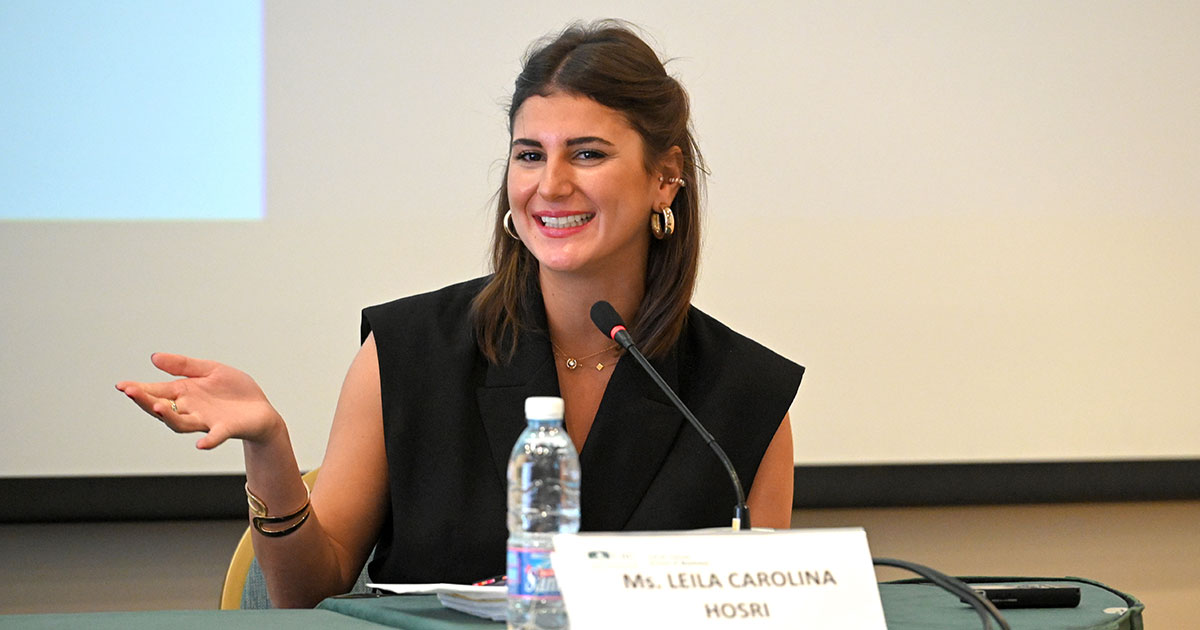 Bringing family traditions and technological progress together is central to Leila Carolina Hosri’s approach. The business values her grandparents passed down continue to guide her decisions as she explores the opportunities digital transformation offers her generation.
Embracing technology, she explained, is “a natural direction that one takes as a new generation,” shaped by constant exposure to new tools and ways of working. What matters is having the curiosity to explore these opportunities without losing the values that have sustained the family business.
Throughout the discussion, Dr. Fahed-Sreih highlighted the challenges of sustaining a family business across generations, particularly the need to balance professional accountability with strong family relationships.
“Family businesses do not survive on legacy alone. Their continuity depends on clear governance, earned leadership, and the ability to preserve family unity while adapting to change,” she noted.


