National Leaders Convene at LAU to Discuss Lebanon’s Recovery
At a conference hosted by the Adnan Kassar School of Business, policymakers, academics, and students delved into tangible reforms, economic opportunities, and the role of universities in shaping Lebanon’s future.
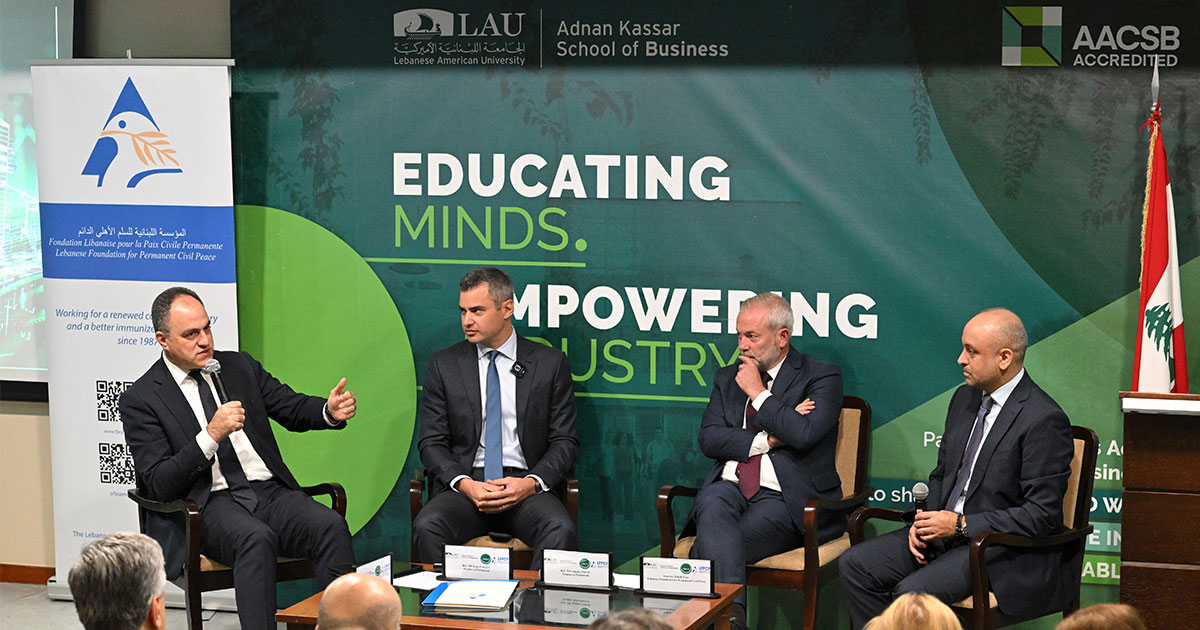
These were among the topics examined on November 10, 2026, when LAU’s Adnan Kassar School of Business (AKSOB), in collaboration with the Lebanese Foundation for Permanent Civil Peace (LFPCP), represented by its co-founder and chair, Professor Antoine Messarra, convened ministers, parliamentarians, academics, and members of the university community at the LAU Beirut campus for “Building Lebanon’s Future: A Multi-Sector Approach to State-Building and Recovery,” a national conference aimed at connecting economic recovery plans with practical solutions.
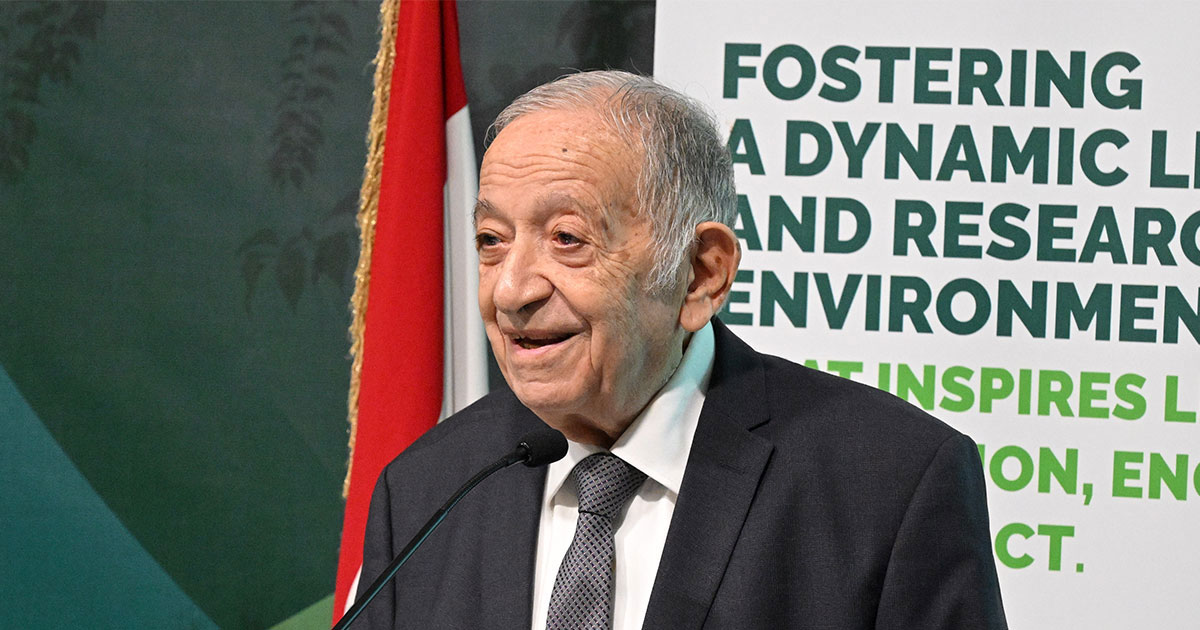
At the heart of the discussions was a question LAU President Chaouki T. Abdallah raised: With citizens growing increasingly impatient for change, what concrete improvements could they expect in the coming months?
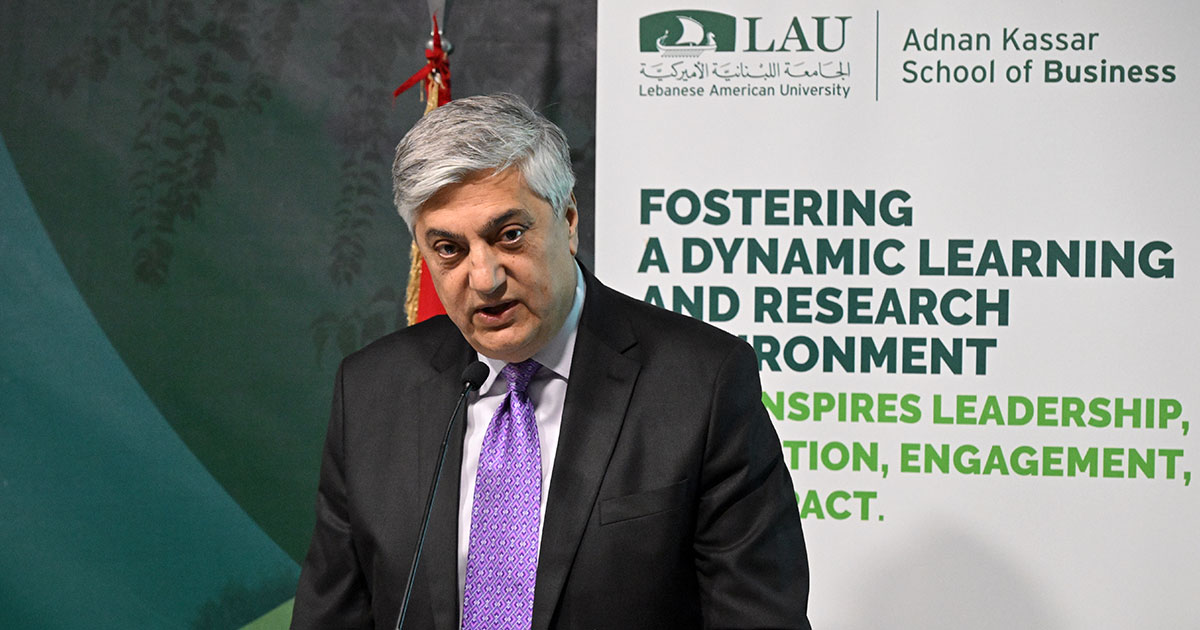
This point challenged policymakers to demonstrate how their long-term strategies could have tangible results in citizens’ daily lives.
Moderated by AKSOB Dean Dima Jamali, the first panel comprised Minister of State for Administrative Reform Fadi Makki, Minister of State for Technology and Artificial Intelligence and Minister of Displaced Persons Kamal Shehadi, and Minister of Agriculture Nizar Hani to explore practical approaches to economic recovery, digital transformation, and sustainable development.
“Universities have an important role to play in connecting academic expertise with national priorities, contributing research and knowledge to address Lebanon’s challenges, and preparing students to become active contributors to the country’s future,” said Dr. Jamali.
The discussion offered concrete examples of changes already underway. Dr. Makki pointed to progress in digitizing government services.
“More than 26,000 transactions have been completed online in less than a year. This means greater satisfaction for citizens, who can now complete the entire process digitally,” he said.
While Dr. Makki focused on streamlining access to public services, Dr. Shehadi addressed the opportunities digital transformation could create for Lebanon’s workforce and entrepreneurs.
For students entering a rapidly changing labor market, his message was particularly relevant.
“Do not fear Artificial Intelligence,” Dr. Shehadi advised. “It could potentially help you venture into untapped potential, such as launching new businesses.”
He also pointed to a national upskilling initiative that has already trained approximately 2,000 participants, linking technological advancement to employment and entrepreneurship.
The discussion then turned to Lebanon’s agricultural communities, where modernization could improve livelihoods and strengthen rural economies. Dr. Hani presented the National Agriculture Strategy 2026-2035, which aims to modernize farming, improve food traceability, and support rural development.
Developed through broad national participation, the strategy is supported by the Agriculture Partners in Lebanon, comprising more than 120 partners, including universities, research institutions, international organizations, and local stakeholders.
“We need an agricultural sector that creates prosperity for farmers, strengthens local economies, and drives rural development,” said Dr. Hani.
His remarks illustrated how university research and technical expertise could support national development, while giving students opportunities to apply their knowledge to challenges facing Lebanon’s communities.
But delivering these improvements also depends on effective governance. A second panel, moderated by Attorney Rabih Kays and featuring Parliamentarians Antoine Habchi, Tony Frangieh, and Jimmy Jabbour, examined decentralization, public-private partnerships, and administrative reform as ways to strengthen institutions, attract investment, and improve services across Lebanon’s regions. The Q&As engaged participants from diverse professional and academic backgrounds, as they pressed the lawmakers for tangible results. Their concerns connected the proposed reforms with the everyday realities of citizens and businesses.
This exchange demonstrated the value of bringing academic expertise into national decision-making while giving students firsthand insight into the challenges they may one day help address.
Ultimately, the conference returned to the challenge that was initially raised by President Abdallah: Citizens are running out of patience, and the success of Lebanon’s recovery efforts must be measured by meaningful improvements in their lives.


