LAU Launches the Engineers for Impact Institute to Serve Communities Nationwide
The new School of Engineering institute pairs student teams with municipalities and NGOs on multi-semester projects that carry ideas from first prototype to implementation.
Across Lebanon, municipalities and local organizations face problems that call for engineering know-how, from managing water and waste to detecting the early onset of forest fires, yet many lack the means to hire it. Meanwhile, engineering students often graduate before they apply their learning outside the classroom.
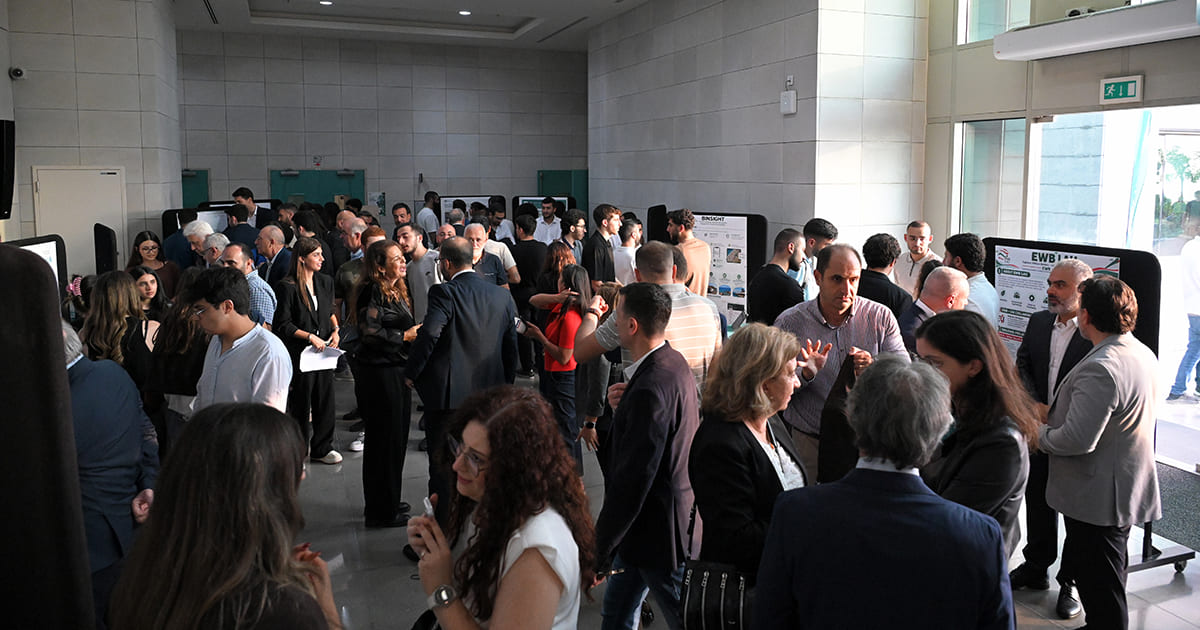
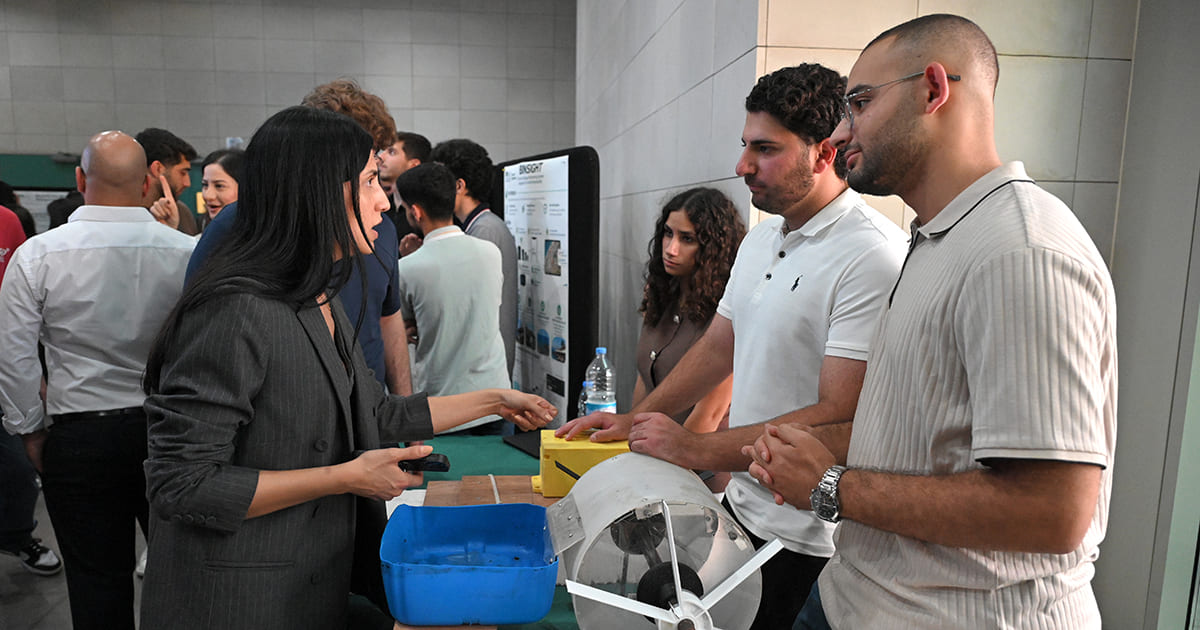
The LAU School of Engineering (SOE) set out to close that gap with the launch of the Engineers for Impact (E4I) Institute on October 12, 2026, at the LAU Byblos campus. Municipal leaders, NGO partners, current and former parliamentarians, and representatives from the Lebanese Red Cross, the Civil Defense, and Caritas, joined students, faculty, and staff for the event. Student projects were on display in the form of posters and prototypes.
Dean Michel Khoury described the institute as the school’s way of giving back to its community after two years of groundwork with municipalities and NGOs. “This is a win-win initiative,” he said. “Our students gain experience by working on real projects, while our municipal and NGO partners benefit from our students’ fresh ideas and affordable engineering support.”
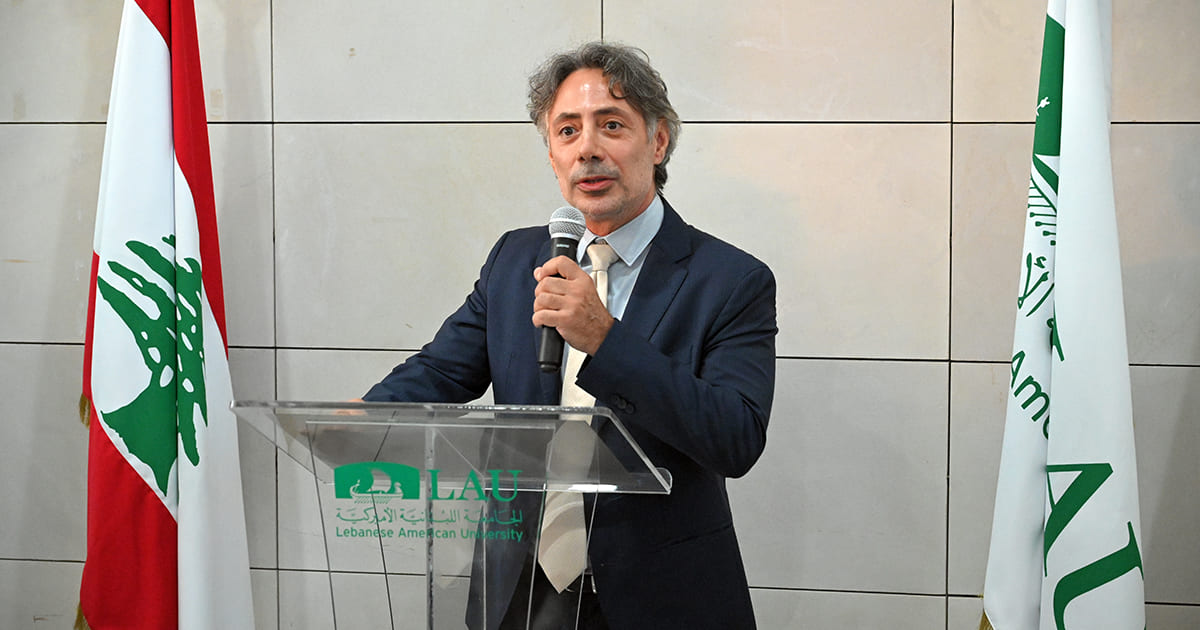
Associate Dean and Associate Professor of Civil Engineering Caesar Abi Shdid referred to the institute as a meeting point. “E4I matches the talents of our students, under the supervision of faculty, with civic issues in communities that need engineering solutions,” he said.
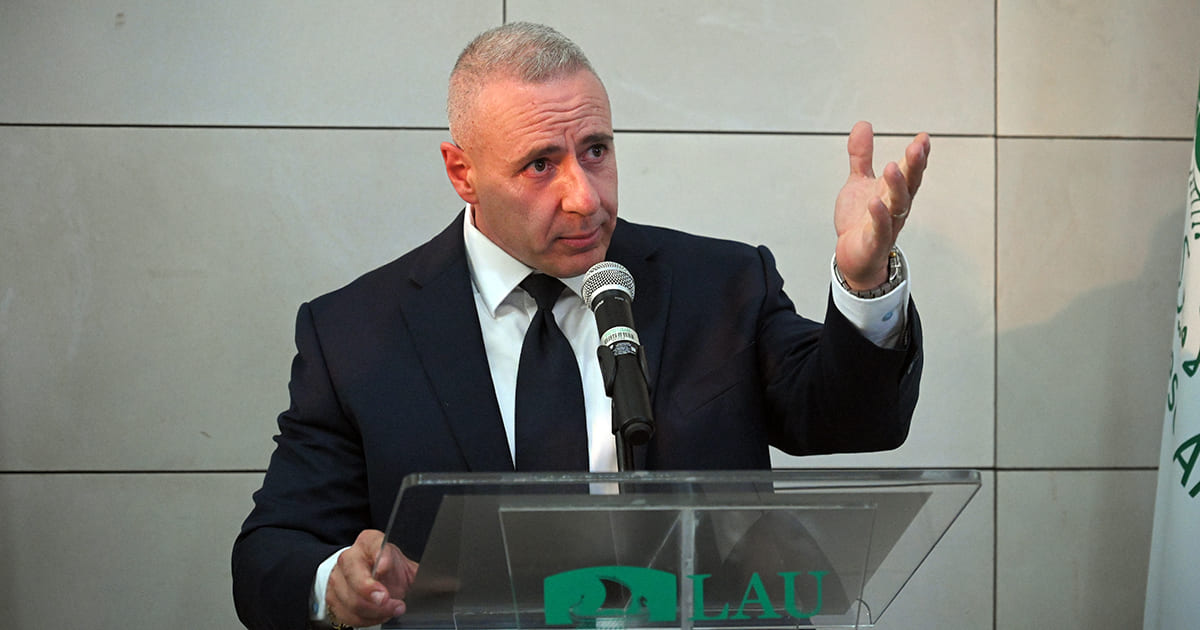
The institute builds on GNE 345 Civic Engagement for Engineers, a course introduced two years ago. A single semester, however, was rarely enough to take a project from problem to working solution. E4I now gives that work continuity, with each student team completing a defined phase before the next carries it forward.
“For students, this means that participation does not necessarily end when the semester is over,” said Instructor and E4I Co-Director Elie Elias.
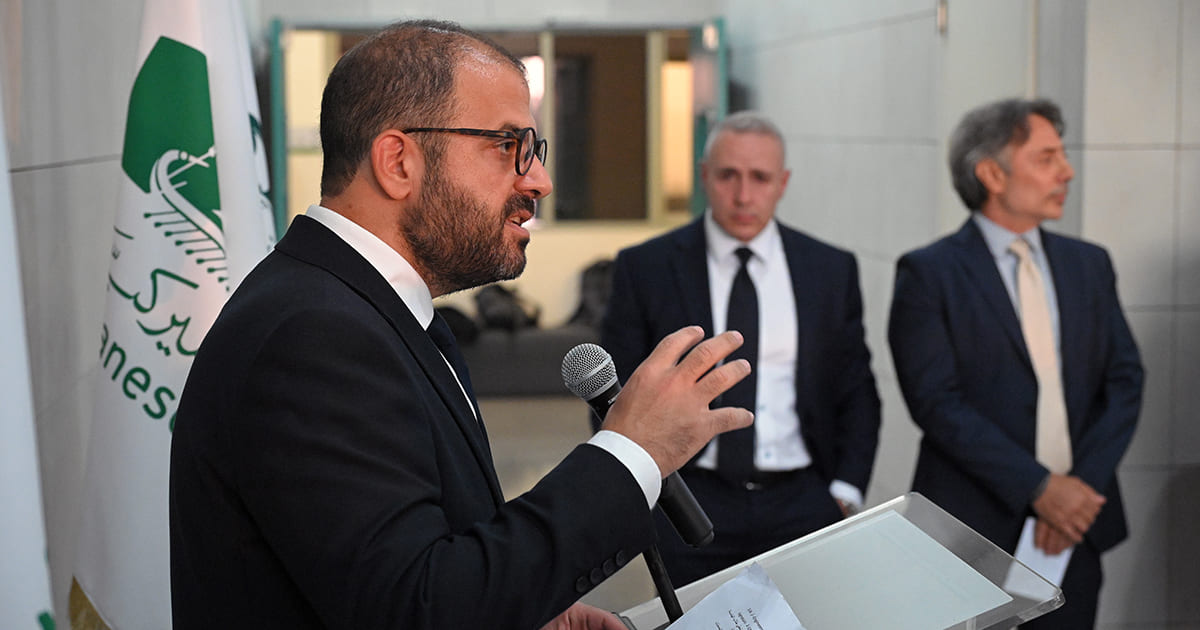
For Assistant Professor and E4I Academic Co-Director Mazen Nakad, the institute “will allow students to better understand the nature of work they might be interested in and to take on research and project initiatives.”
E4I already works with partners such as the Bentael Nature Reserve, Development for People and Nature Association (DPNA), Nawraj, the Michel Issa Foundation, and Georgia Tech’s Design for Planet Impact program. Its projects range from rainwater harvesting at Amchit Public School to biomass pellet production in collaboration with eight municipalities across the southern qazas. The institute has plans in place to reach more municipalities across Lebanon, with benefits projected to extend beyond the projects’ scope.
“We hope that successful initiatives can generate local opportunities related to their construction, operation, and maintenance,” Dr. Elias said.
The projects on display illustrated how E4I combines several engineering disciplines to tackle one problem. Malak Aboul Hosn, a second-year computer engineering student, and Jad Chamoun, a fourth-year electrical engineering student, have joined forces to develop an early fire detection and suppression system for the Bkassine Pine Forest Reserve.
“He handles everything when it comes to the sensors and wiring, and I mainly specialize in the communications,” said Aboul Hosn, referring to Chamoun, who also designs the system’s power supply and calculates the power needed for the system to work, as well as its heat output.
“This is an intergenerational project, so we are carrying on the research of our peers,” Chamoun added. The system is now in the pilot stage and will be deployed at the end of the semester.
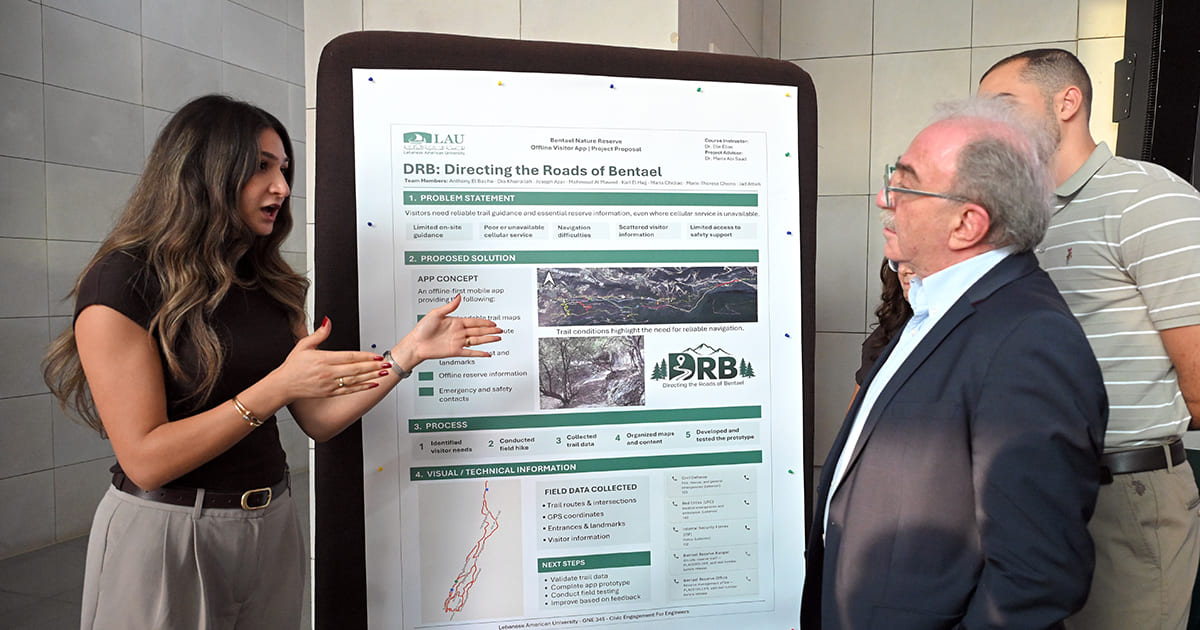
At Bentael Nature Reserve, a second team continued work on Directing the Roads of Bentael, an offline map application that the team before them spent a full year developing. It comprises Maria Chidiac, a fourth-year industrial engineering student, and mechanical engineering students Mahmoud Al Mawed and Marie Therese Cherro. “The reserve has two main problems: the lack of guides and the absence of internet connection,” said Al Mawed. “Visitors and hikers can get lost or face an emergency with no way to reach anyone, and that is the gap our app fills.”