LAU’s AKSOB Hosts a Timely Debate on Digital Banking and the Future of Finance
The Institute for Banking and Finance and the Union of Arab Banks brought together industry leaders, faculty and students to examine how technology, regulation and trust are reshaping banking.
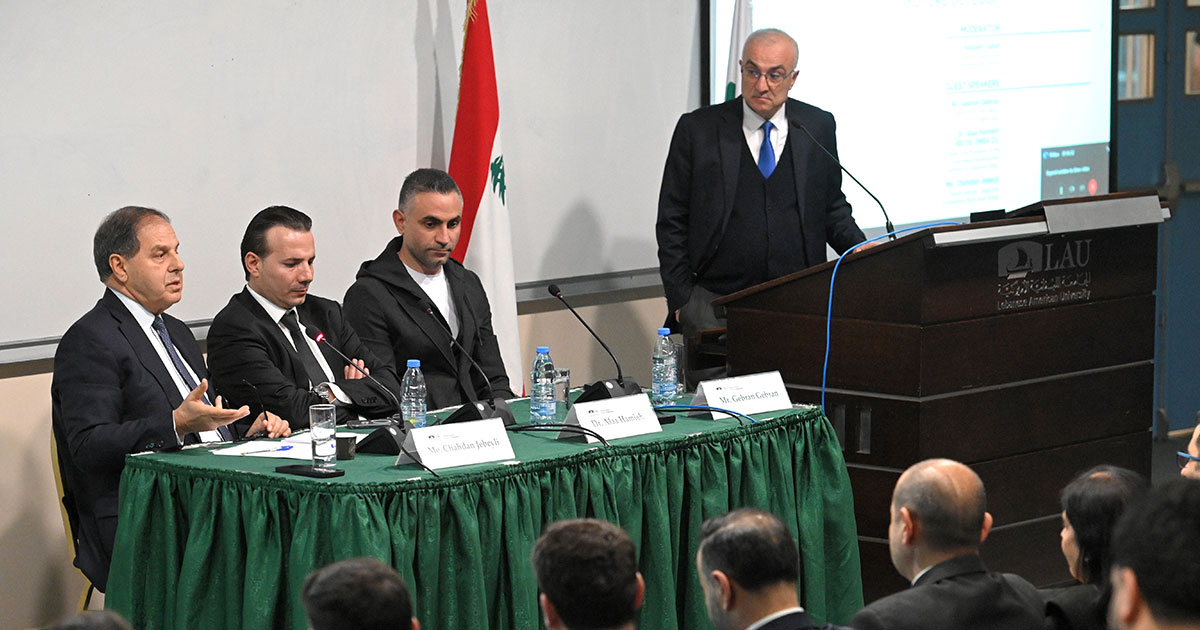
In a region where confidence in financial institutions has been tested and cash has often replaced convenience, the question is no longer whether banking will change, but how and who will shape it.
That question was at the center of the seminar, Digital Banking in Lebanon and the MENA Region: Current Trend and Future Outlook, held by the Institute for Banking and Finance at the Adnan Kassar School of Business (AKSOB), in partnership with the Union of Arab Banks, on February 5, 2026, at the LAU Beirut campus.
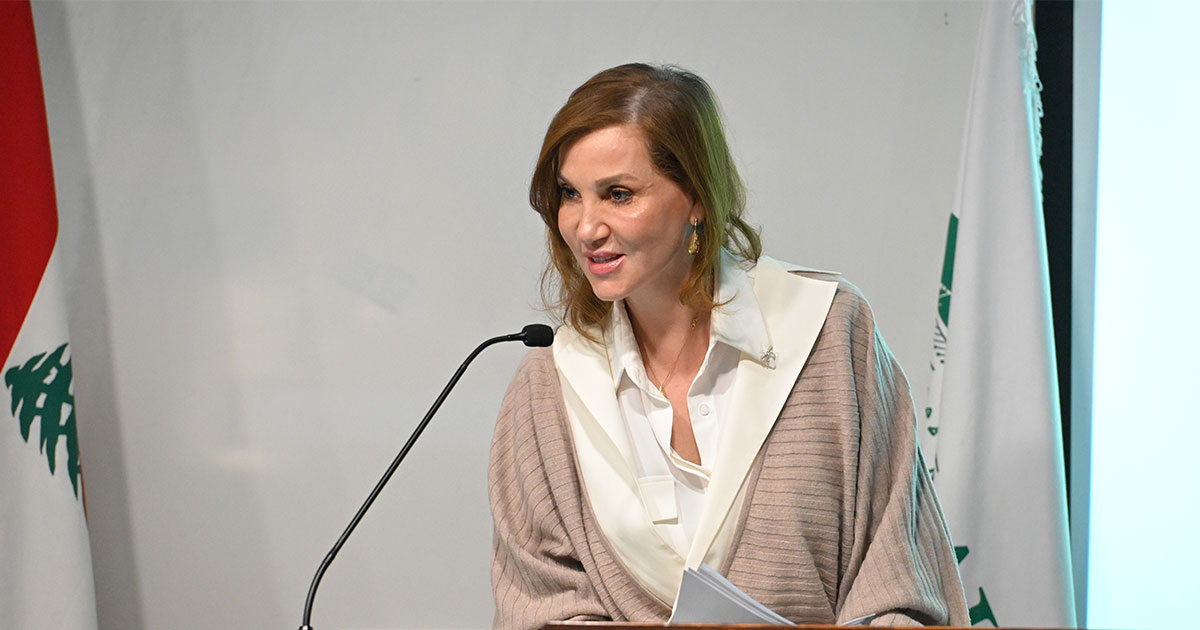
Dr. Dima Jamali, Dean of the Adnan Kassar School of Business.
Digital banking is an opportunity rather than simply a technological shift, noted AKSOB Dean Dima Jamali in her opening remarks. It is a part of a broader effort focused on “building trust and transparency while connecting people to the financial sector and financial opportunities,” she went on to say, urging students to grasp its significance and play an active role in shaping the future of the financial sector.
That challenge of trust-building steered the rest of the session, moderated by Hisham Tabsh, director of the Institute for Banking and Finance, who briefly outlined digital banking in Lebanon and the MENA region, noting that it is reshaping how we live, work and engage with financial services, as well as how banks operate and compete.
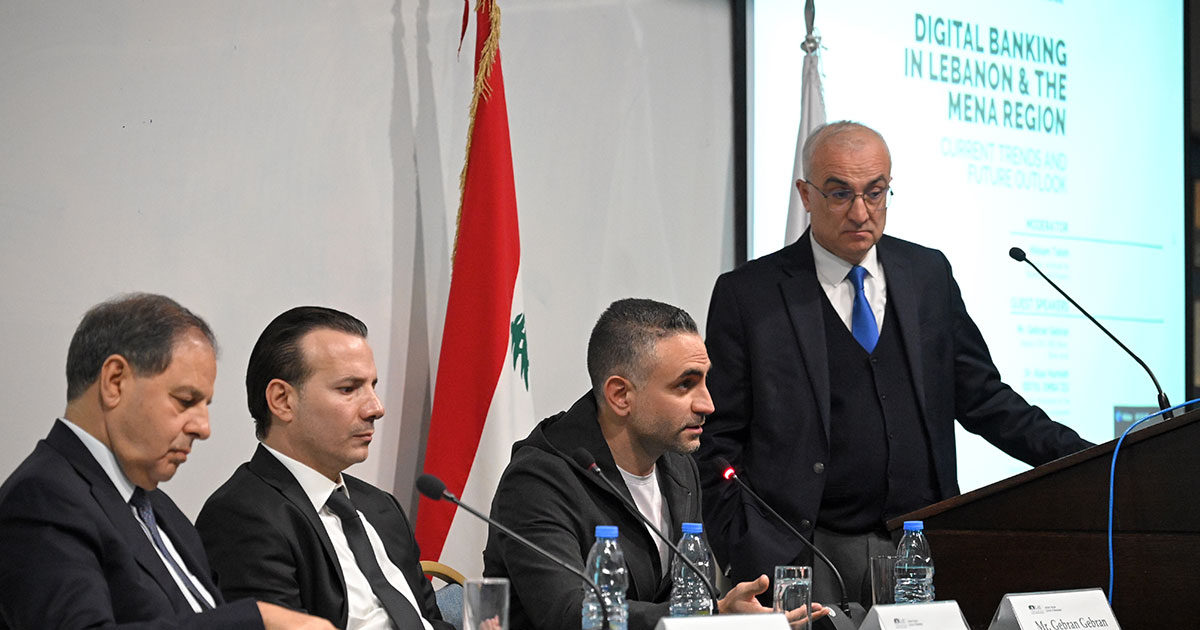
From right to left: Mr. Hisham Tabsh, Mr. Gebran Gebran, Dr. Alaa Hamieh and Mr. Chahdan Jebeyli.
Gebran Gebran, deputy CEO of NEO Bank at Bank Audi, placed the local debate in a global context, reminding the audience that change is being driven by people, not platforms. “Banks did not make digital banking just because they wanted to change,” he said, “They made digital banking because the public has changed, and banks have to adapt to this change.”
He asserted that the financial crisis in Lebanon has demonstrated that banks alone cannot drive meaningful change. “There is something that has to happen at the national level, at the central bank and at the government level that banks cannot do,” he said, underscoring the need for systemic reform, institutional credibility and a regulatory framework capable of restoring confidence in the financial sector.
In that sense, digital banking is less about speed than about redefining the relationship between institutions and the people they serve, Gebran added. “What we are building is not just a faster way to open an account,” he said, “It is a different relationship with the bank,” one that reflects a broader rethinking of how financial institutions engage with individuals, support economic activity and position themselves within society.
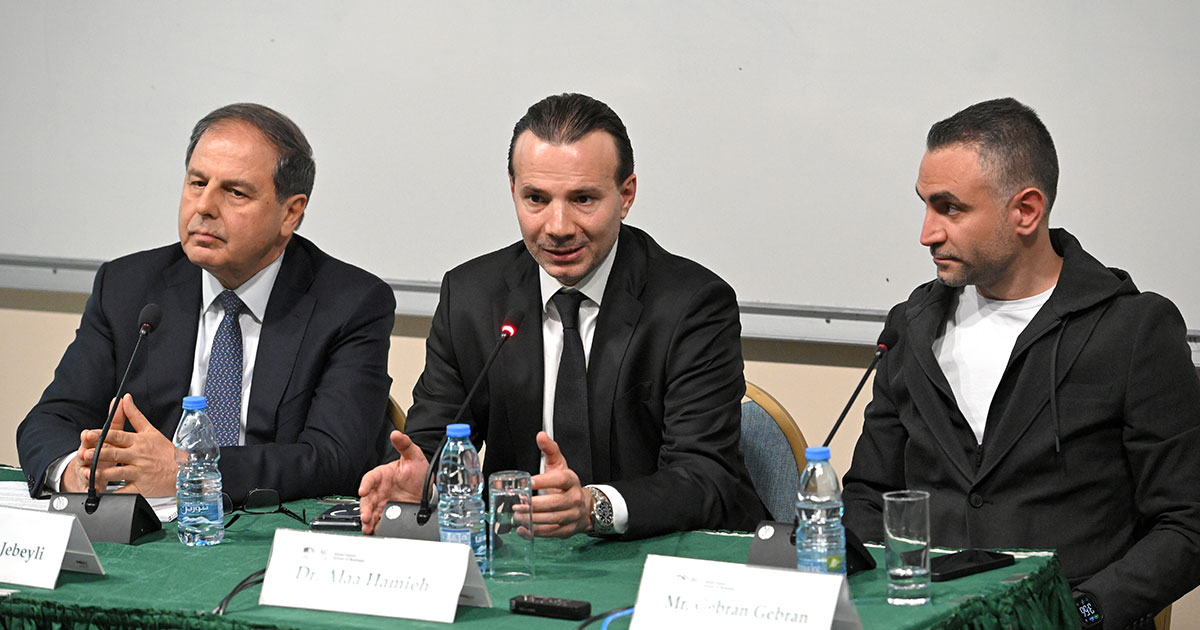
Dr. Alaa Hamieh (BS ’05, EMBA ’21) describes the factors reshaping the banking sector.
Expanding on that perspective, Dr. Alaa Hamieh (BS ’05, EMBA ’21), former vice president of the Investment Development Authority of Lebanon, situated digital banking within a broader process of institutional change. Referring to “the re-engineering of financial operations, the analysis of big data and the use of AI to enhance the client experience,” he described a transformation that reshapes how financial systems are designed and governed. In a region where many remain excluded from formal finance, “the implications extend beyond commercial performance to questions of access, inclusion and long-term development,” noted Dr. Hamieh.
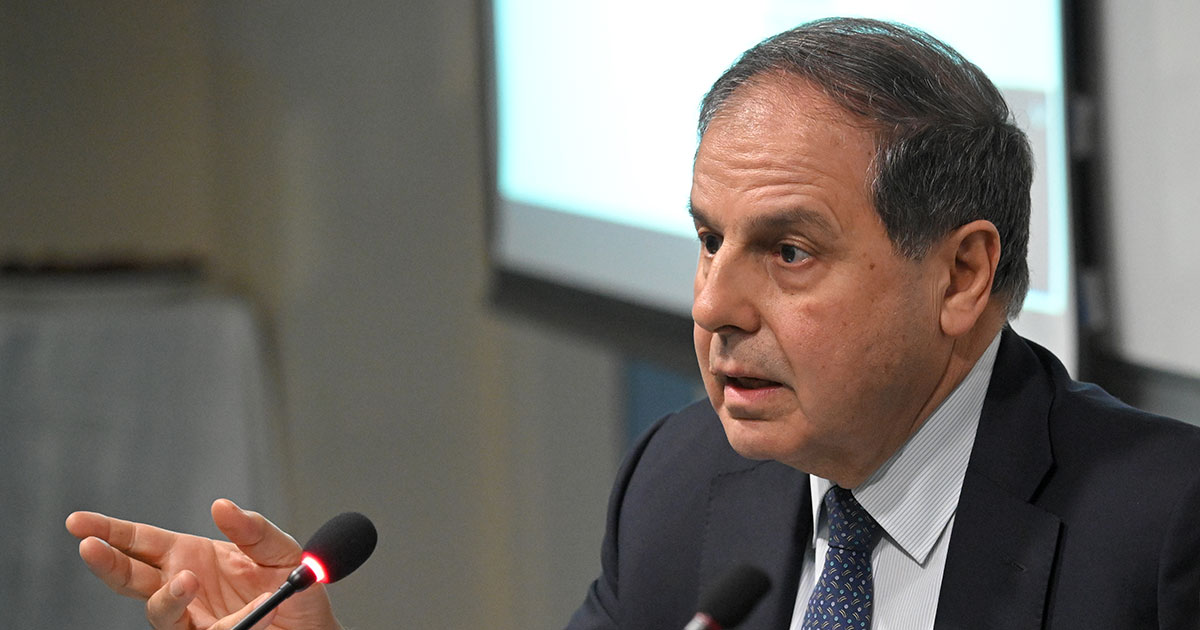
Senior Adviser for Legal and Compliance at Bank Audi Group, Mr. Chahdan Jebeyli.
This promise, however, was accompanied by a careful reminder that digital transformation cannot be separated from responsibility and governance. Chahdan Jebeyli, senior adviser for legal and compliance at Bank Audi Group, noted that the issue was the core purpose of banking itself. “At the end of the day, banking is not about a traditional commercial enterprise,” he said, “It is about an enterprise that should take care of people’s money.”
He emphasized that while technology is “a business enabler and a control enabler,” it also introduces new risks that institutions must anticipate and manage responsibly. For Jebeyli, this dual reality places governance, consumer protection and regulatory discipline at the center of any credible digital banking model.
Innovation is not simply a matter of speed or convenience, he added, but a test of whether financial institutions can modernize while safeguarding trust, stability and public confidence.
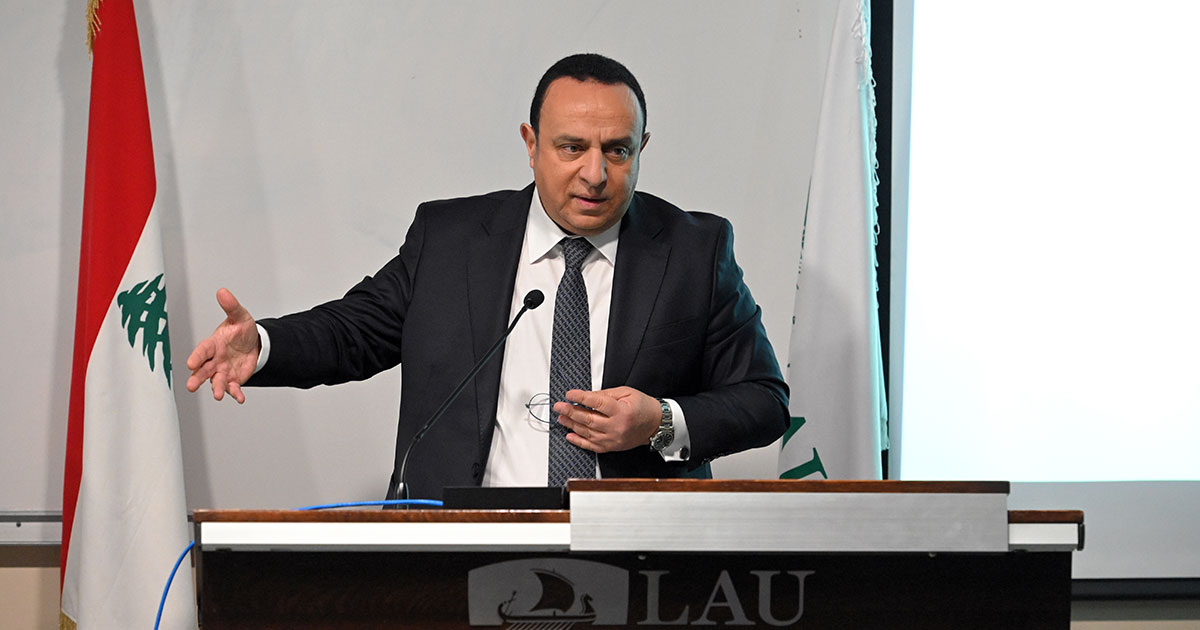
Secretary General of the Union of Arab Banks, Mr. Wissam Fattouh.
Wissam Fattouh, secretary general of the Union of Arab Banks, reinforced the regional dimension by linking digital transformation to financial inclusion. “Such inclusion means that every individual should have access to a bank account,” he said, stressing that access to financial services is a prerequisite for economic participation. Digital banking, he added, is not just about applications but about “how financial operations are being conducted” and how finance itself is delivered.
Running through the discussion was a shared recognition that trust cannot be rebuilt overnight. As the speakers highlighted, “Trust to return to the banks needs time and reliable actions,” particularly from regulators responsible for protecting people’s interests.


