Newly Discovered Compounds Display Potential for Future Cancer Treatment
LAU researchers publish a promising new oncological study that may yield significant advances in anticancer therapy.
Cancer is the second leading cause of mortality worldwide, and lung cancer is the deadliest form of the disease, representing 30 percent of all cancer-related deaths.
Currently, the most common treatments for advanced lung cancer (stages III and IV) are chemotherapy drugs containing platinum, such as cisplatin, carboplatin, and oxaliplatin. While these drugs have a proven track record of prolonging patients’ life expectancy, they all work in very similar ways, with similar side effects, and can become ineffective over time as cancer cells grow resistant.
In a recent paper titled “The anti-neoplastic potency of epoxy-substituted polyaromatic platinum(II) and platinum(IV) complexes against A549 lung cancer cells,” published in the European Journal of Medicinal Chemistry, faculty from the Department of Physical Sciences at LAU’s School of Arts and Sciences sought to develop new effective treatments with safer options. They were led by Dr. Robin Taleb, associate professor of chemistry at SoAS, Dr. Costantine Daher, dean of the Alice Ramez Chagoury School of Nursing, and their Australian collaborator, Dr. Janice Aldrich-Wright.
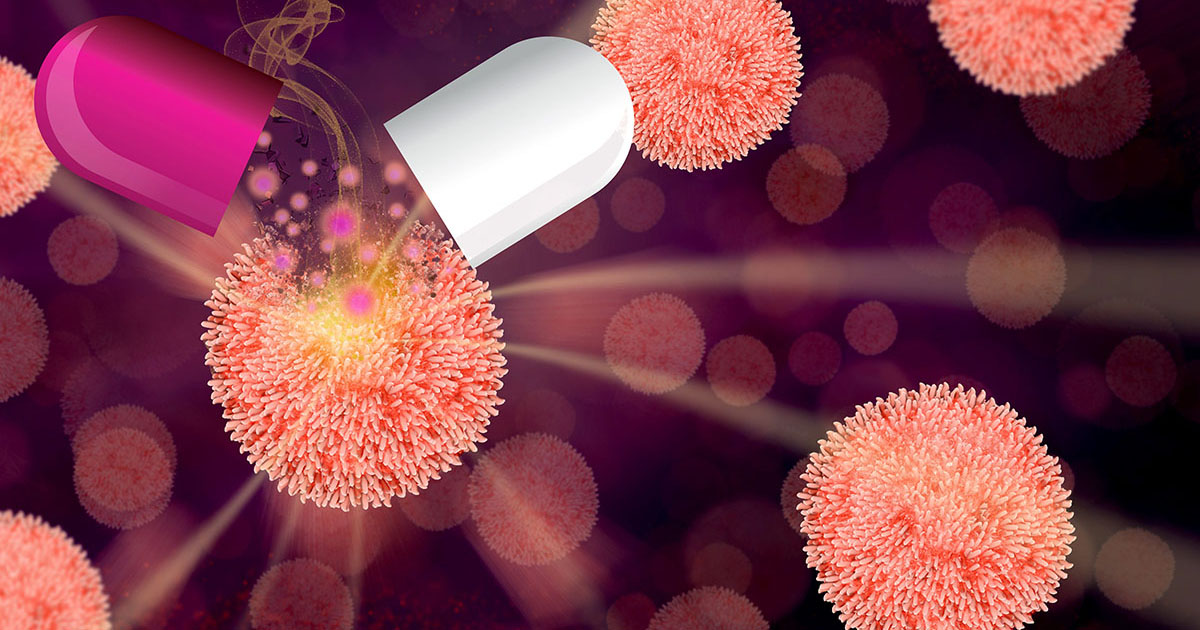
The study, which focused on the synthesis of two novel platinum compounds that show remarkable anticarcinogenic properties, may result in the development of new tools in the crucial fight against cancer in its most widespread form.
The researchers designed two platinum analogues, PtII56OSS (platinumII) and PtIV56OSS (platinumIV), by slightly modifying earlier versions to change their interaction with cancer cells. Contrary to traditional treatments like cisplatin, and, instead of damaging DNA, the platinum analogues primarily target structures inside the cell that preserve its shape and movement. This makes them especially efficient in killing cancer cells that have developed resistance to standard platinum chemotherapy. The two complexes were also found to accumulate mostly in different parts of the cell, rendering them suitable agents for combination therapy.
PlatinumIV has shown particular effectiveness in targeting malignant cells thanks to its low toxicity against normal cells. Designed to stay dormant in healthy tissue and become active mainly inside oxygen-starved environments such as cancer cells, it could be used as a prodrug that can be “switched on” when and where it is needed. Coupled with its high tolerability in living organisms, this makes platinumIV a prime candidate for the development of future lung cancer treatments that would greatly reduce the adverse effects commonly associated with the current generation of chemotherapy.
Having opened new inroads in the field and produced two compounds that exhibit great potential for future studies (including favorable toxicity results on pigs), the researchers hope to patent both agents and, through further collaboration with the pharmaceutical industry, eventually take PtIV56OSS to human trials.
To browse more scholarly output by the LAU community, visit our open-access digital archive, the Lebanese American University Repository (LAUR).


