Nursing Students in Action Advancing Prevention
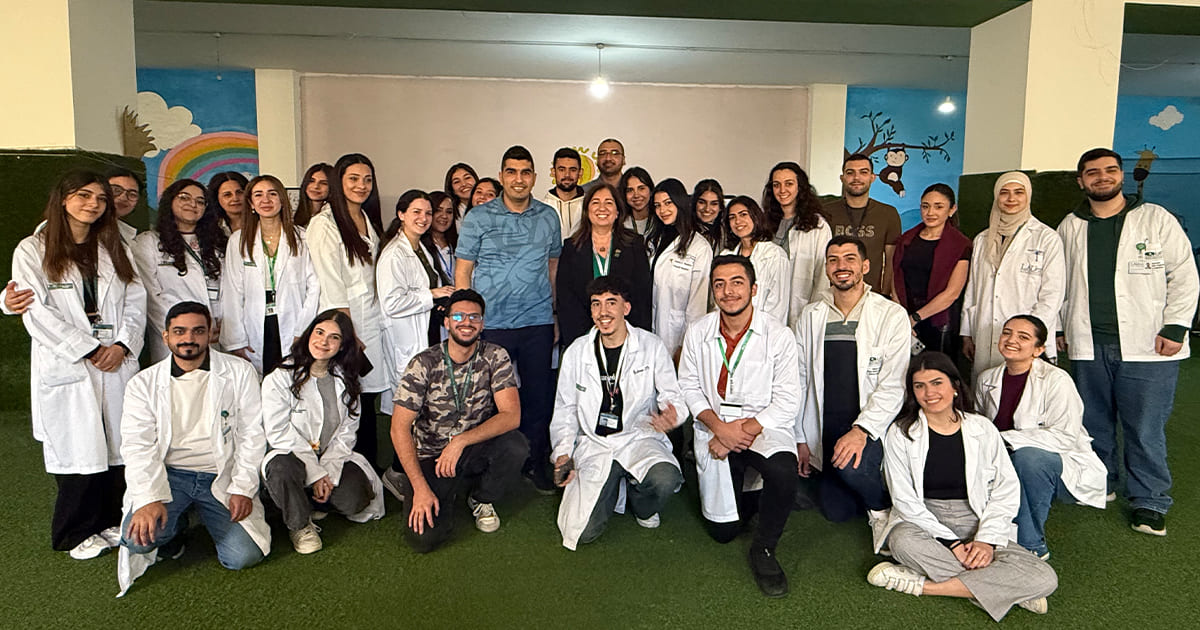
Students from the LAU Alice Ramez Chagoury School of Nursing come together through the annual Health Day initiative to promote health education and champion early intervention in community wellbeing.
Communities thrive when health education extends beyond clinics into everyday spaces, where awareness can translate into lifelong habits and create accessible entry points for prevention, early detection, and informed decision-making.
It was in that spirit that the LAU Alice Ramez Chagoury School of Nursing (ARCSON) held its annual Health Day at Byblos National High School on December 5, transforming the campus into an interactive learning environment. The student-led initiative has become a familiar fixture on the school’s calendar, with this year’s edition distinguishing itself through a sharper preventive focus and a deliberate emphasis on younger age groups.
Widely recognized as a critical window for shaping lifelong behaviors, the middle school age group benefits most from early interventions related to nutrition, oral health, physical activity, smoking, bullying and addiction. By centering outreach in a school setting, the Health Day ensured equitable access to credible health information, particularly for students with limited exposure to routine healthcare.
Throughout the day, LAU nursing students set up interactive and informative booths designed to encourage participation and dialogue. Compared to previous years, the stations covered an expanded range of topics, including chronic disease prevention, infectious disease control, nutrition, medication safety, digital eye health, dental health, environmental health and child wellbeing.
Complementing the educational component, students and participants also had access to free blood pressure checks, diabetes screening, vision assessments and dental health guidance. These services, aligned with international school health recommendations, reinforced the message that prevention is most effective when information is paired with early assessment.
Dr. Bahia Abdallah, assistant professor and nursing program director at the school, emphasized the long-term value of sustaining Health Day as an annual initiative and underscored the value of the interprofessional collaboration approach through coordination with pharmacy and medical students.
“By holding this health day every year, we provide reliable, Arabic-language health education that responds to local needs while reinforcing prevention and early detection,” she said. “Equally important, it allows our nursing students to apply community health competencies in real settings, where they develop leadership, accountability, and age-appropriate communication skills.”
Beyond its impact on student learning, the Health Day continues to deliver sustained value to the wider community. Its annual continuity helps build trust between families, schools, and academic health institutions, while consistently reinforcing prevention topics such as influenza and COVID-19, diabetes, hypertension, cancer screening, medication safety and child health.
For third-year nursing student Sleiman Dhaybi, participating in the event was both formative and rewarding. He described the initiative as “a meaningful experience that allowed me to apply my nursing knowledge in a real community setting while promoting health awareness among students,” noting that engaging directly with attendees strengthened his communication skills and reinforced the importance of preventive care in his development as a future nurse.
As for senior student Leen Ghannam, participating in the initiative was “truly valuable.” She noted that the middle school students’ courage, curiosity, and active participation inspired her and reinforced that nursing extends beyond bedside care to promoting health and awareness in society.
The success of the event was rooted in strong collaboration. Nursing students not only planned and delivered all educational stations but also coordinated with other disciplines, pharmacy and medical students, NGOs such as SAID NGO, Dialeb, and Barbara Nassar Association for Cancer Patient Support and with sponsors, while faculty members ensured scientific accuracy, ethical standards, and alignment with nursing education requirements. Byblos National High School facilitated logistics and student participation, and external partners supported screening and awareness activities—together reflecting an effective academic–school partnership model.
Looking ahead, ARCSON plans to expand this model by replicating the Health Day across additional public schools, formalizing partnerships with municipalities, NGOs, and primary care organizations, and embedding community outreach more deeply within nursing curricula. Future editions will also track basic outcomes such as attendance, screenings completed, and referral needs, aligning the initiative with accreditation expectations for community engagement.


