The LAU Alumnus Driving Cloud Innovation in the Middle East
Leveraging his industrial engineering background from LAU, alumnus Jihad Nehme (BE ’01) talks about his regional leadership in cloud infrastructure and digital transformation.
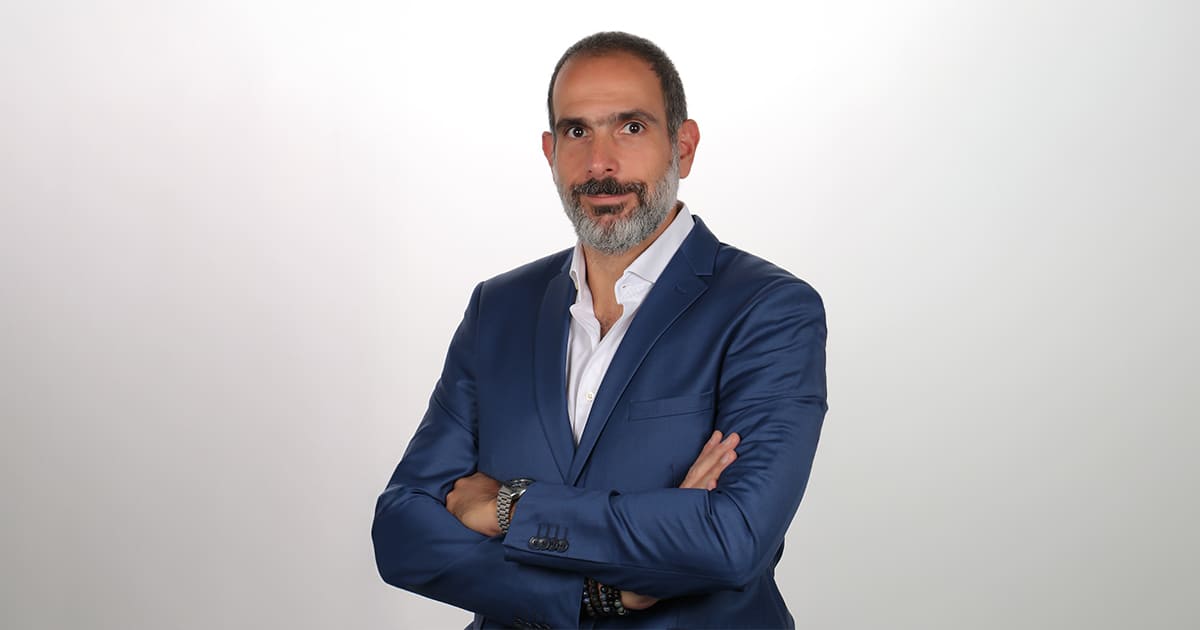
Long before cloud infrastructure became central to national transformation strategies, LAU alumnus Jihad Nehme (BE ’01) was already helping organizations reimagine how technology could drive scale, resilience and innovation. His distinguished career in next-generation infrastructure solutions reflects a rare combination of systems thinking and strategic vision—hallmarks of the interdisciplinary education he received at LAU.
His trajectory was recently highlighted at CONFEX2025 in Saudi Arabia, where Nehme appeared as a keynote speaker representing Edarat Group, a data center and technology services company he has been part of for nearly two decades, most recently as its chief business development officer.
During his tenure, he played a pivotal role in launching one of Saudi Arabia’s first local private cloud services, a milestone that continues to shape digital readiness and data sovereignty across the region.
In this interview, Nehme reflects on the evolution of cloud infrastructure in the region, his transition from engineering to technology leadership, and the lasting influence of his LAU education.
As chief business development officer at Edarat, one of the region’s leading firms in Information and Communications Technology (ICT) and cloud infrastructure, could you tell us about your role and how cloud infrastructure has become such a driving force behind digital transformation today?
I focus on driving strategic growth, identifying new market opportunities, building partnerships, expanding our service offering and providing fit-for-purpose scalable solutions for our customers. I work closely with the company executives, technical teams and external stakeholders to align our cloud offerings with national visions and evolving enterprise needs.
Cloud infrastructure in Saudi Arabia has become the backbone of digital transformation, especially due to the Cloud First Policy and the Expenditure and Project Efficiency Authority (EXPRO), through which the public sector can purchase cloud services directly. In addition, cloud gives organizations the agility, scalability and resilience they need to innovate.
Data is the new oil. Today, every sector is moving toward data-driven business models. Cloud infrastructure makes this possible by offering secure, scalable platforms where applications, AI workloads and mission-critical systems can operate seamlessly. It has shifted technology from being a support function to becoming a strategic enabler of competitiveness.
Back in 2014, you helped introduce a new line of business in Saudi Arabia as one of the first local private cloud service providers. Why was that move significant at the time, and how has it shaped the region’s approach to digital transformation since?
In 2014, the cloud landscape in Saudi Arabia was still in its very early stages, and global providers had limited regional presence. Launching one of the first sovereign private cloud services was a transformative step because it addressed real concerns around data security, compliance and sovereignty.
This early investment helped many organizations, especially the insurance and financial sectors adopt cloud with confidence, specifically in meeting Disaster Recovery mandates. It also accelerated cloud readiness across the Kingdom and contributed to the broader digital transformation agenda that we see emphasized today under Vision 2030. This phase built the foundation for what has now become one of the region’s fastest-growing digital economies.
You graduated from LAU with a degree in industrial engineering—a field quite distant from ICT and cloud services. What inspired you to move to technology, and how did you bridge the gap between engineering and digital innovation?
Industrial engineering may seem distant from ICT, but at its core, it taught me how to optimize processes, improve systems and solve complex problems. These skills translate very well into technology and digital infrastructure. The curriculum at LAU also helped me take courses in economics and finance, in addition to other engineering majors such as electrical, civil, etc. This diversification made me agile and able to adapt to any type of business.
What inspired me to move to IT was seeing how technology could improve efficiency and innovation, opening a whole new world for opportunities ranging from data center all the way to application services. Over time, I came to realize that engineering and technology are deeply connected: Both aim to build smarter, more efficient systems that improve how people and organizations operate.
I bridged the gap by continuously learning and understanding technology from a business and operational perspective.
Having spent more than 15 years specializing in workload migration, how do you see cloud infrastructure evolving with the rise of AI, edge computing and the growing interest in data sovereignty across the region?
Over the years, I witnessed firsthand how cloud infrastructure evolved from being a centralized platform to a distributed, intelligent ecosystem. With AI, we’re seeing massive demand for hyperscale data centers, high-performance computing, GPU as a Service, and AI use cases that can support enterprises in driving growth, operational efficiency, smarter decision-making, faster innovation and enhanced resilience.
Edge computing is pushing infrastructure closer to users and devices, enabling real-time processing and supporting low-latency applications.
At the same time, data sovereignty is becoming a defining factor in the region. Governments and enterprises want the benefits of cloud technologies without compromising control over their data. This is driving the rise of sovereign cloud models, neoclouds and hybrid architectures that balance innovation with regulatory and national requirements.
With Edarat also operating in Lebanon, do you believe the country is ready for large-scale data migration and digital infrastructure development? What opportunities and challenges do you foresee in this space?
Lebanon has always stood out to me for its talent and resilience. There is no shortage of skilled professionals, innovative ideas or entrepreneurial mindset. From a readiness perspective, there is growing interest in digital services, modernization, and cloud adoption across multiple sectors. This creates real opportunities for cloud adoption and digital transformation.
The challenges are mainly structural, related to infrastructure reliability, regulations and long-term investment stability. However, challenges often create the strongest opportunities. With the right frameworks and partnerships, Lebanon can accelerate its digital transformation and position itself as a regional contributor to the digital economy.
Looking back, how did your time at LAU shape your perspective on leadership and innovation, and what advice would you share with current students aspiring to make their mark in the tech industry?
LAU played a fundamental role in shaping who I am today. Beyond the technical knowledge, it taught me how to think critically, communicate effectively and adapt to change. These values are extremely essential in an industry that evolves as rapidly as technology.
My advice to students is simple: Don’t feel pressured to have everything figured out early on. Instead, focus on staying curious, adaptable and committed to learning. Technology will continue to reinvent itself, and the people who succeed are those who embrace change rather than fear it. Focus on building strong analytical skills and surround yourself with mentors who inspire you.
Believe in your ability to make an impact. I am speaking from experience; the region today offers more opportunities than ever for young innovators.
This interview has been edited and condensed for the sake of clarity.


