Empowering Lebanon’s Student Investigators
Students, faculty, mentors, and alumni came together at the inaugural Lamia Sabbah Ali Ahmad National Psychology Research Day to advance knowledge, drive meaningful research, and address pressing mental health, cultural, and social challenges.
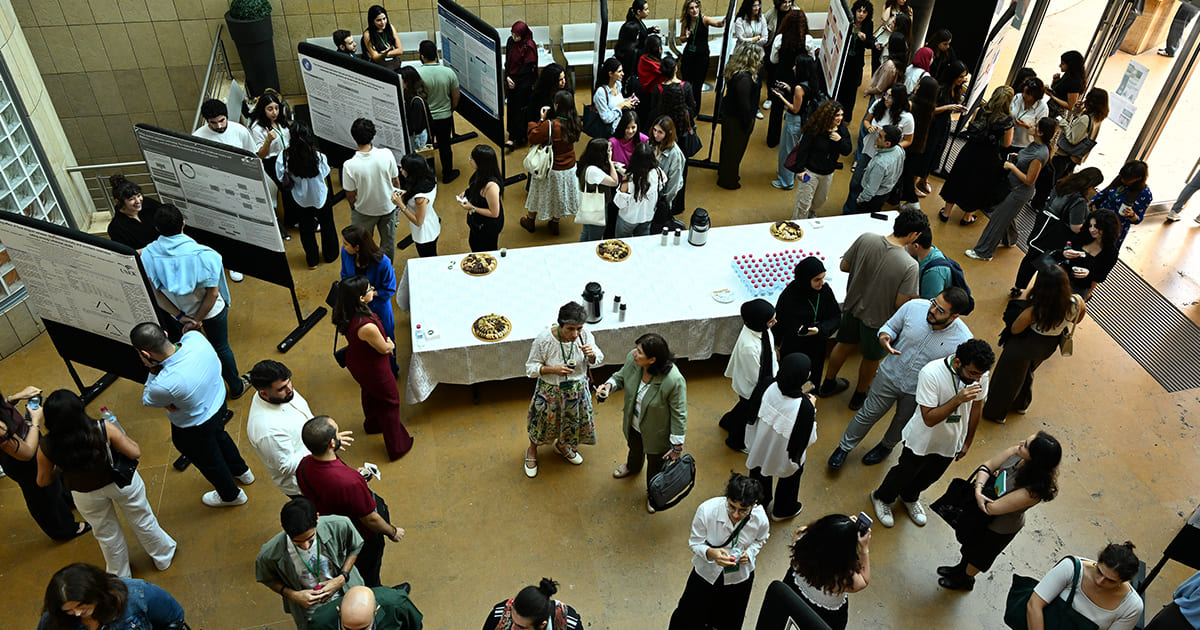
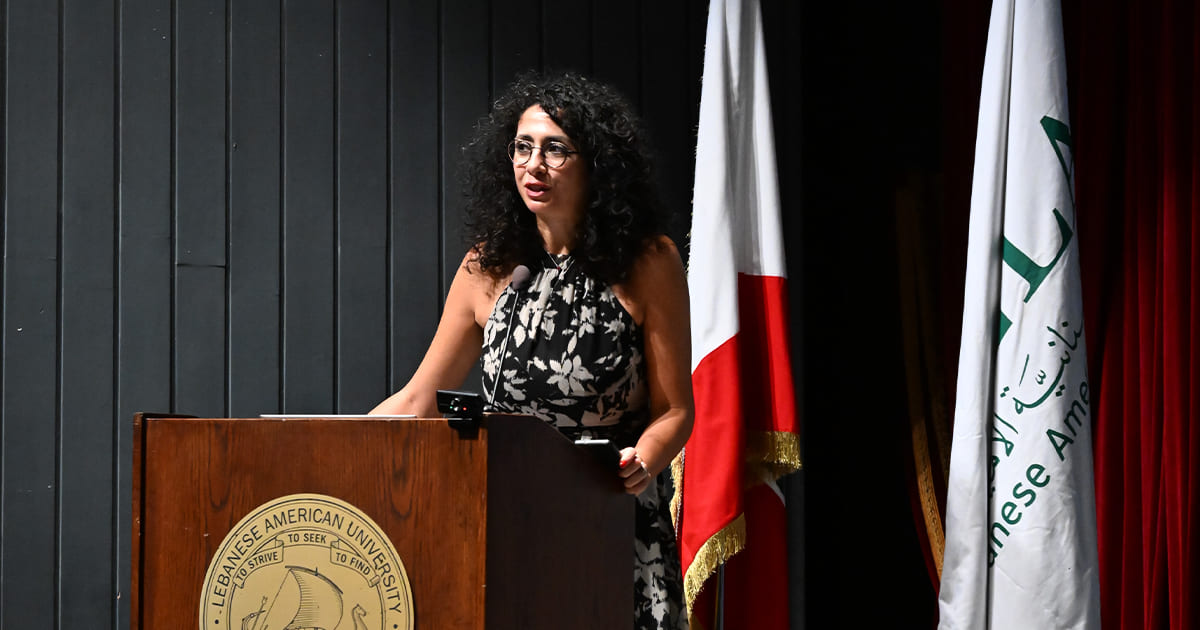
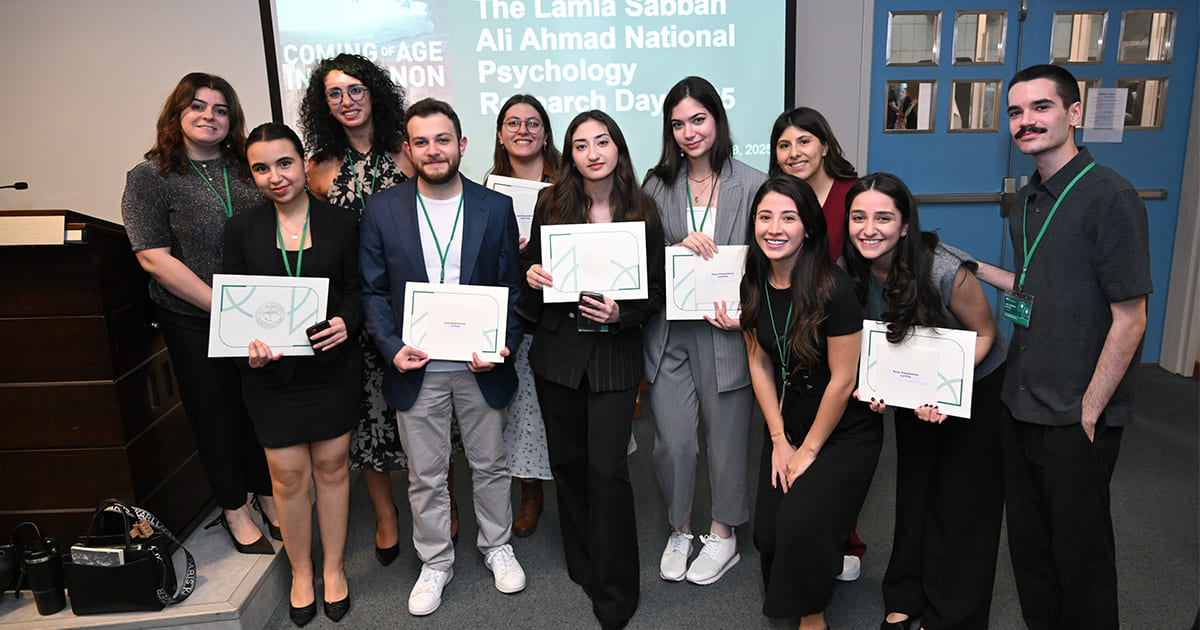
On November 8, 2025, LAU held its inaugural Lamia Sabbah Ali Ahmad National Psychology Research Day at its Beirut campus, uniting psychology students and faculty from across the nation for a day of discovery, dialogue, and collaboration.
Organized by Associate Professor and Chairperson of the Psychology and Education Department Pia Tohme and Assistant Professor Sahar Obeid, both from LAU’s School of Arts and Sciences (SoAS), and with the support of the department’s psychology faculty, the event was a first-of-its-kind initiative in Lebanon. It highlighted the research findings of psychology students from universities across the country and featured competitive oral presentation panels selected from over 60 abstracts submitted by undergraduate and graduate students, alongside a vibrant poster session.
The studies, which were reviewed by an inter-university scientific committee, spanned clinical, social, developmental, and cognitive psychology, exploring issues such as war trauma, mental health, loneliness, diet, and meaning in life, offering students a unique platform for national scholarly exchange.
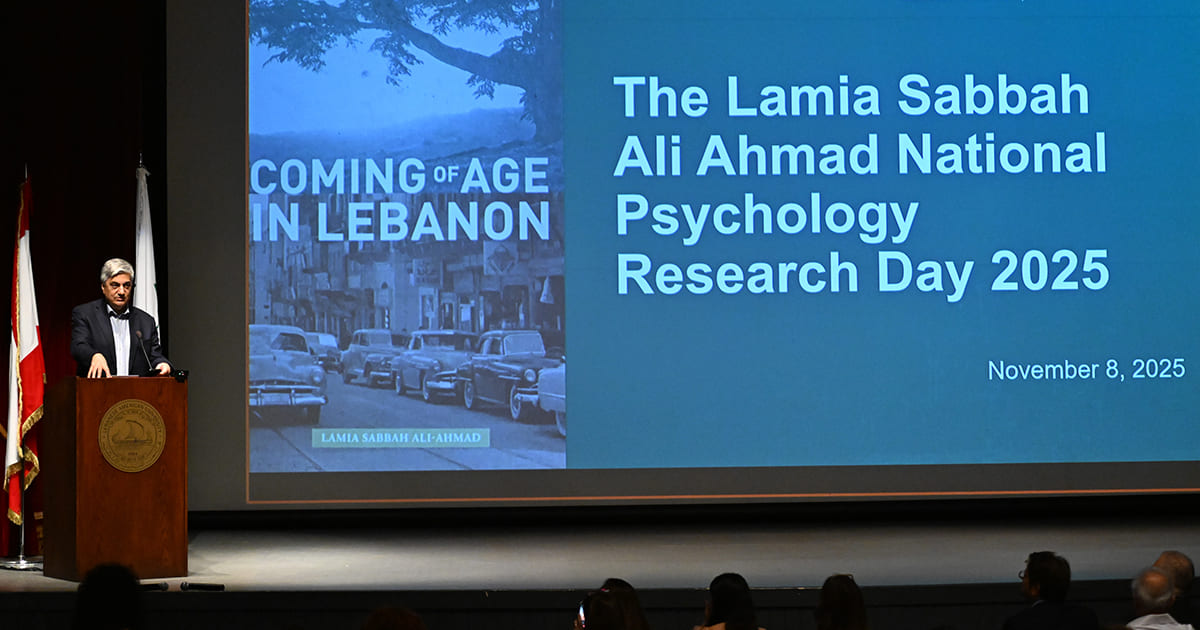
LAU President Chaouki T. Abdallah opened the event by emphasizing the broader significance of research. “The main challenge here is not just to survive, but how do we thrive?” he said. “How do we give opportunities to young people so that they can come together and propose ideas, so the next generation does not have to deal with the same problems their parents did?”
The eponymous National Psychology Research Day was held in memory of LAU alumna Lamia Sabbah Ali Ahmad (AA ’57; BA ’59), a trailblazer whose 1959 thesis on adolescent psychology—Coming of Age in Lebanon—was recently republished. “Great research is not only about what we know today,” her daughter, Rim Ali Ahmad Kraytem, reflected in her opening speech, “but about daring to imagine what we might understand tomorrow.”
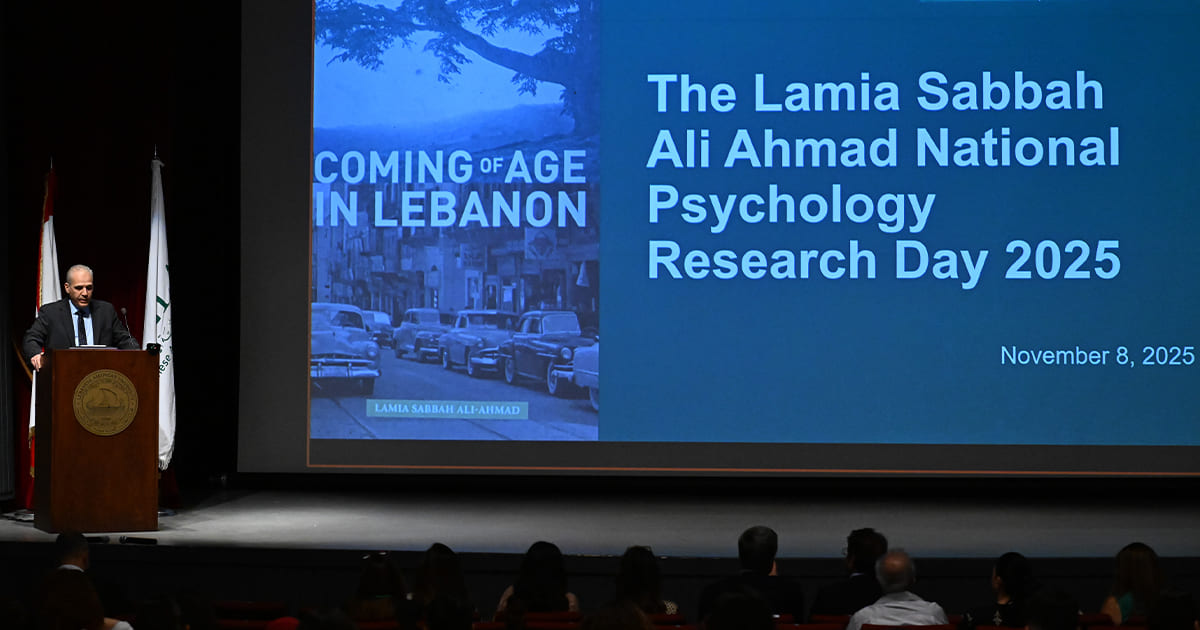
SoAS Dean Haidar Harmanani described the inaugural research day as “a space where ideas meet purpose,” highlighting LAU’s commitment to advancing scientific understanding of the human mind. He then lauded the growth and dynamism of LAU’s psychology program, announcing the launch of the university’s Master of Science in Clinical Psychology.
“This is the first MS program in psychology in Lebanon,” said Dr. Tohme. “It underscores the evidence-based, scientist-practitioner model of the clinical psychology program.”
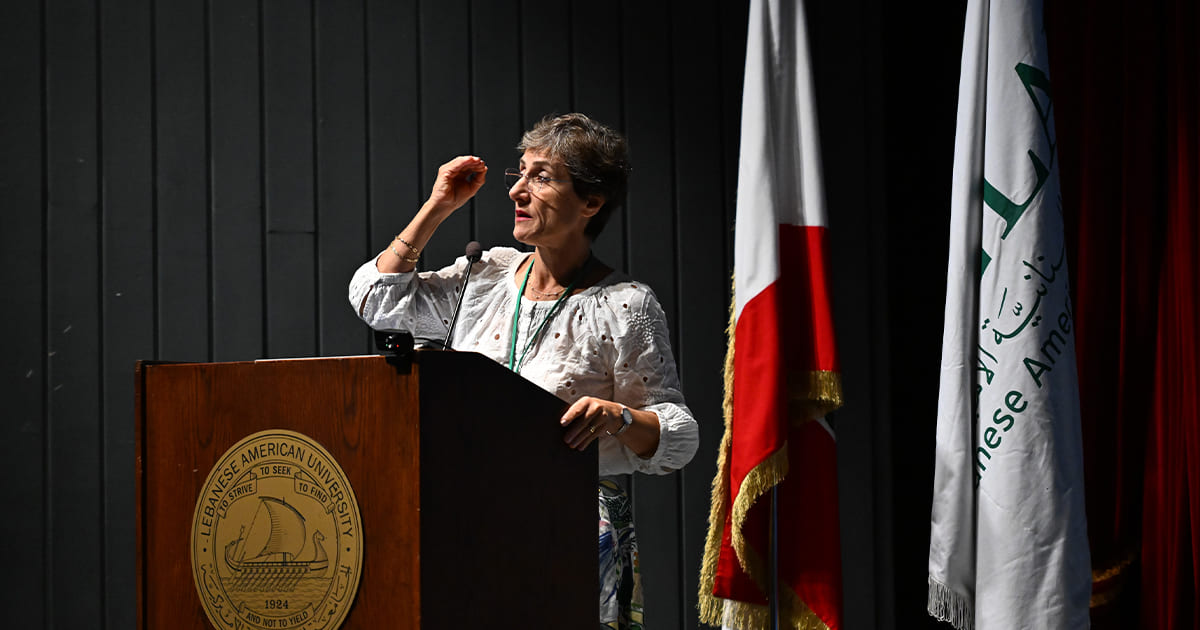
Following the opening addresses, keynote speakers, Associate Professor Leyla Akouri Dirani at the Department of Psychiatry at the American University of Beirut Medical Center and Assistant Professor Sahar Obeid in the Department of Psychology and Education at LAU, shared insights on the state of psychological research in Lebanon.
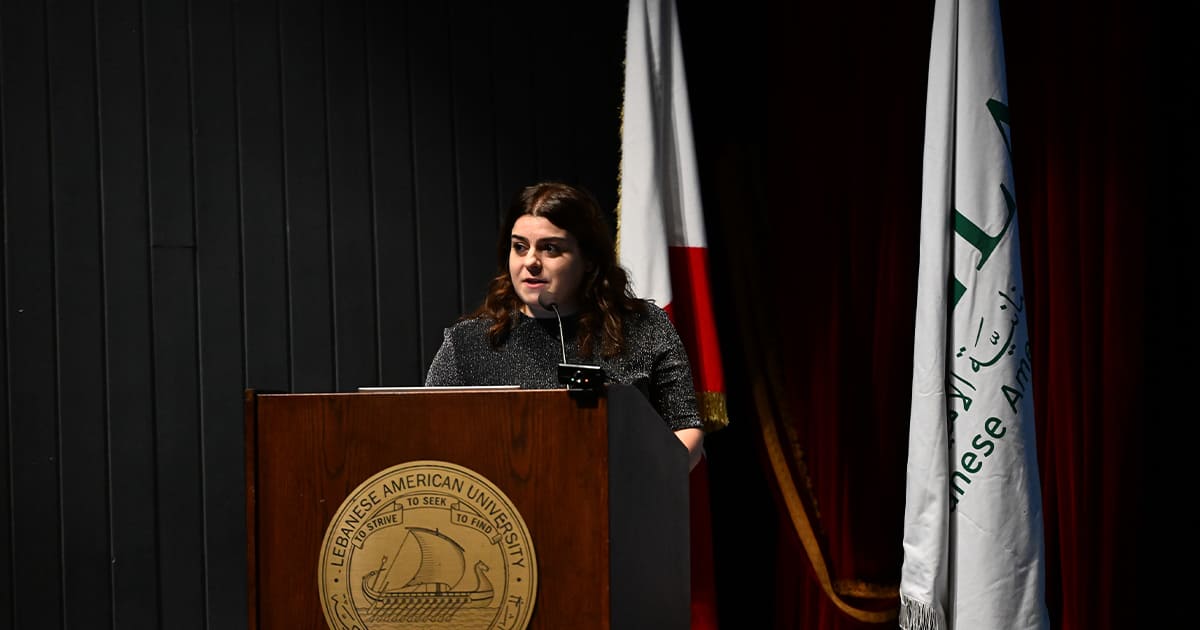
While Dr. Dirani discussed the challenges and opportunities of conducting research locally, emphasizing relevance, rigor, ethics, and cross-institutional collaboration, Dr. Obeid complemented her perspective by stressing transparency, methodological soundness, and the personal qualities that drive impactful research: Curiosity, resilience, and teamwork. Both speakers agreed that meaningful research extends beyond publication, serving a higher purpose by addressing local needs, benefiting society, and building sustainable scholarly networks.
The discussion then turned to LAU alumni, with two distinguished graduates showcasing their contributions to global research.
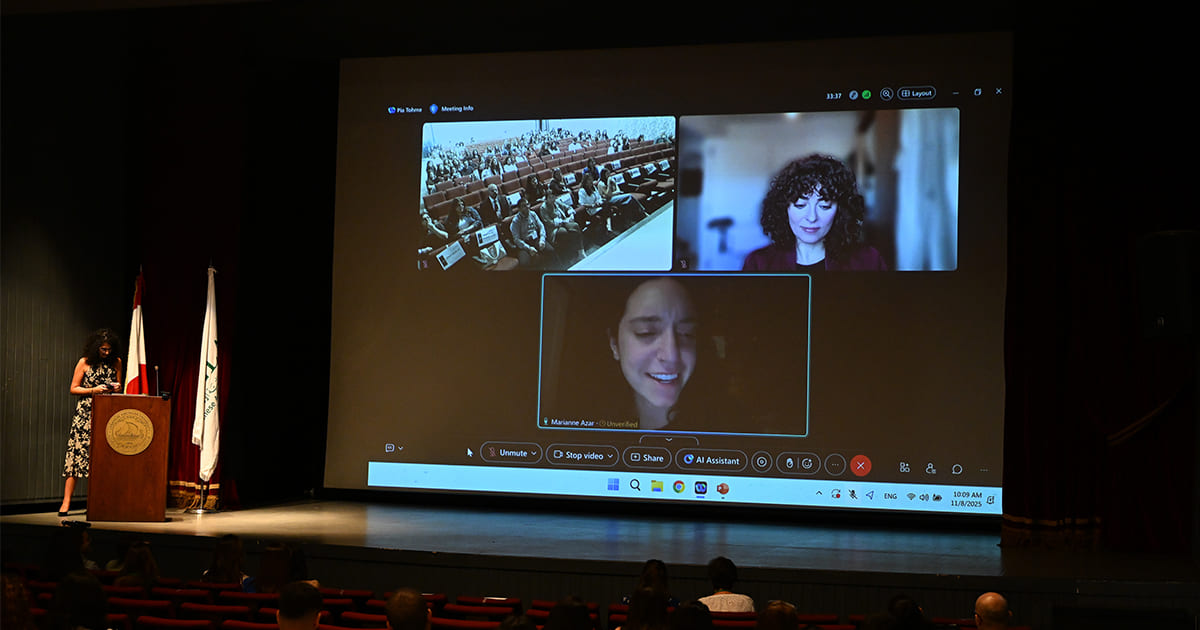
Dr. Katherine Bassil (BS ’16), assistant professor at the University Medical Center Utrecht, examined the ethical implications of AI chatbots in mental healthcare. She noted the growing reliance on AI tools among youth, particularly amid limited access to professional mental health support, and presented findings from multi-stakeholder surveys and patient interviews. She highlighted both the promise of such technologies in improving accessibility, scalability, and education, and the risks they pose, including misinformation, dependency and reduced human connection, underscoring the need for ethics and digital literacy among young users.
Alumna Marianne Azar (BA ’19), a doctoral student at the Neuroscience of Language Lab at New York University, presented her research on how Lebanese Arabic mediates emotional perception and expression, showing that cultural context shapes emotional responses, even in English use. Azar also discussed morphological processing in Arabic and its implications for neuroscience, cognitive psychology, and language disorders, calling for culturally grounded research in Lebanon to support future cognitive and clinical studies.
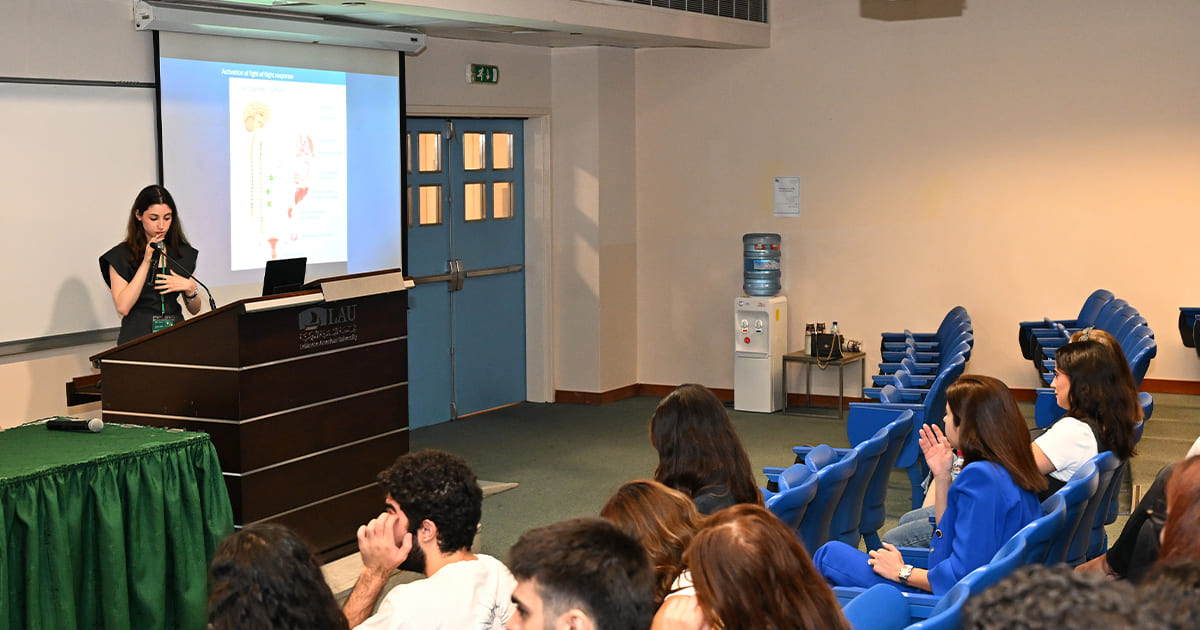
The day continued with 12 oral presentations by students from Lebanese universities. Among the presenters, Marianne Ghoch (BA ’25), now pursuing a master’s in Gender Studies at LAU, shared her award-winning study, The Impact of War Trauma on Lebanese Youth, which earned second place in Undergraduate Psychology Research at the Undergraduate Research and Innovation Competition (URIC) in Abu Dhabi. Her research examined how the 2023–2024 war affected young adults’ mental health, revealing high rates of PTSD, anxiety, and depression alongside signs of post-traumatic growth.
Karel Harb (BA ’24), another alumna presenter who is now pursuing her master’s degree at the University of Balamand, examined links between loneliness, depression, and physical health using the English Longitudinal Study of Ageing (ELSA) data. She stressed the need to integrate mental healthcare into medical practice and replicate such research in Lebanon, where aging and social isolation are rising concerns.
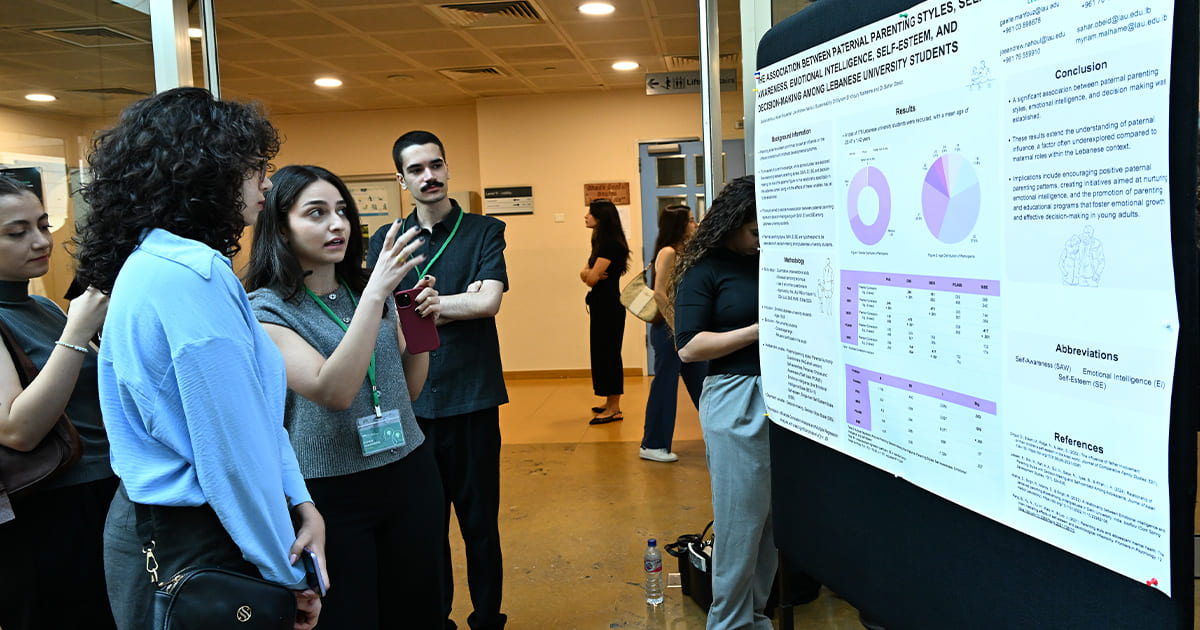
Running alongside the oral presentations, a poster session in the LAU Adnan Kassar School of Business lobby offered attendees a more personal and interactive lens on psychology in everyday life, allowing them to walk around and hear directly from the participating students about their research.
In her poster, Yara Chamoun (BA ’25), who is currently taking a gap year to volunteer with an NGO hotline, explored how social conformity shapes appearance-based prejudice among adolescents and adults. “Prejudice is not a very studied topic, and I think it’s a problem that’s arising in schools,” she explained, hoping her work might spark dialogue about bias, belonging, and early social development.
Meanwhile, Taline Rafei (BA ’25) addressed the psychological toll of living amid overlapping crises in her poster. “How can you apply post-traumatic stress if the stress and trauma haven’t passed?” she asked, capturing the lived reality of persistent national stress. Her research highlighted how family bonds, spirituality, and locus of control can buffer ongoing trauma. She is now expanding her study across Lebanon’s diverse regions with faculty support.
Similarly, recent LAU graduate Lea Al Hakim (BA ’25) explored modern relationship anxieties in her poster. Observing what she called “a pandemic of commitment fears” amongst her generation, Al Hakim linked attachment insecurities to growing anxieties about love and stability in uncertain times. “My research is about more than romance,” she shared. “It’s about how we regulate closeness and trust in a world that feels unpredictable.”
The day concluded with the winners being called on stage to receive their awards, which were as follows:
Oral Presentations
- First position – Rudy Younes (USEK) Presentation Title: Finding Strength in Times of War: A Systematic Review of Resilience and Adaptation Among Arabs Exposed to War
- Second position – Marianne El Khoury (AUB) Presentation Title: Beyond the Call: The Experience of Lifeline Operators and Its Impact on Their Mental Wellbeing
- Third position – Ninar Atieh (USEK) Presentation Title: Cognitive Disengagement and Somatic Awareness: Exploring the Link Between CDS, Alexisomia and the Role of Anxiety, Depression, Stress, and Insomnia: A Cross-sectional Study
- Third position – Nour Hassan (Balamand) Presentation Title: Psychological Impact of the Mediterranean Diet on Gastrointestinal Symptoms in Lebanese Adults
Posters
- First position – Joe Andrew Nahoul (BA ‘24), Karen Moukarbel (BA ‘24), Gaelle Mahfouz (BA ‘24) (LAU alumni) Poster Title: Unravelling the Association Between Paternal Parenting Styles, Self-Awareness, Emotional Intelligence, Self-Esteem and Decision-Making Among Lebanese University Students
- Second position – Simona Abou Tayeh Poster Title: The Relationship Between Emotional Eating and Gestational Weight Gain During Pregnancy: Moderating Effect of Mindfulness
- Third position – Leen Baddour (BA ‘25) Poster Title: The Moderating Role of Social Appearance Anxiety in the Relationship Between Perceived Parenting Styles and Eating Disorders Among Young Adults Aged 18–25 in Lebanon: A Cross-sectional Study


