From Concrete to Code: Alumnus Wael Saadé on Building Minds
From building Lebanon’s best-selling educational toy to pioneering AI-powered learning, LAU alumnus Wael Saadé (BE ’17) continues to blend creativity, resilience and purpose as he reimagines how education can inspire the next generation of thinkers and builders.
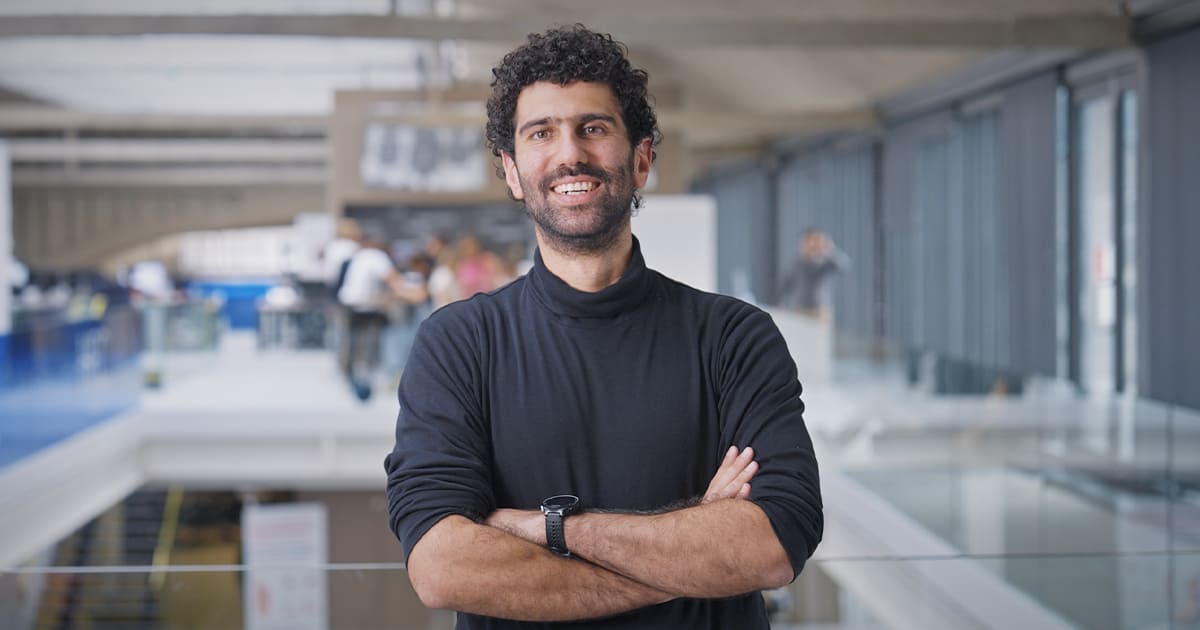
From mixing real concrete in a garage to developing digital tools that teach, Wael Saadé (BE ’17) has always believed that learning should be hands-on, meaningful and accessible. The civil engineering graduate first made his mark as co-founder of “Bildits,” a construction toy that turned playtime into an engineering experience.
What began as a small experiment in his partner’s garage soon grew into Lebanon’s best-selling toy, supported by Berytech, and later acquired by regional investors, expanding it to more than ten countries.
Now based in France as a founder-in-residence at the HEC incubator, Saadé is channeling that same inventive spirit into a new frontier: AI-powered education. His latest venture, “Udarres,” harnesses artificial intelligence to personalize learning—adapting lessons to each student’s style while giving teachers real-time insights to enhance outcomes. Already being piloted in local schools, the tool reflects his belief that education must evolve beyond rigid systems to nurture adaptability, creativity and self-awareness.
In this conversation, Saadé opens up about the philosophies that shape his work—from viewing gratitude as a superpower and failure as a teacher, to his conviction that AI won’t replace humans, but empower those who know how to use it.
How did your civil engineering background at LAU prepare you for entrepreneurship, especially when you transitioned into the toy industry, a completely different field from construction and infrastructure?
I wasn’t the top student at LAU, far from it. But I enjoyed the cool, logical parts of engineering that made me curious about how things actually work. I didn’t take everything I learned directly into “Bildits,” but I used the fun parts I had learned in class to build a curriculum that made kids see construction as something exciting, not intimidating.
The friendships that I built at LAU brought everything to life. My friends were a part of every step, from brainstorming ideas and sketching designs to finding creative fixes and even standing in toy stores promoting “Bildits.”
How did your LAU network and the Lebanese business ecosystem contribute to the success of “Bildits” and its eventual international acquisition?
One of my proudest moments was seeing the Lebanese flag printed on every “Bildits” box, marked “Proudly Designed and Manufactured in Lebanon.” In a market dominated by global brands, like Lego and other international brands, having a locally created toy of that scale was something truly special.
I didn’t fully tap into the LAU network or resources back then, which I later realized could have been a real strength.
The Lebanese market itself is very special; it’s one of the few places where you can test ideas quickly, even if they are not perfect, and get real feedback because everyone knows someone who can help you try, build, and validate. That agility was our biggest advantage; we refined “Bildits” with thousands of users in Lebanon before expanding abroad.
Being Lebanese is challenging; being a Lebanese entrepreneur is even harder. Yet every obstacle carries an opportunity, and I’m very happy that this mindset turned a small garage idea into a product that reached the world.
Your work spans traditional manufacturing with “Bildits” and cutting-edge AI technology today. How do you stay adaptable in rapidly changing industries, and what skills do you think are becoming essential?
I believe adaptability is the most important skill anyone can have. The only certain truth today is that everything changes. What we know now will not be the same tomorrow, and the ability to adapt is what keeps us relevant. That’s the mindset I try to share through both “Bildits” and “Udaress:” Curiosity, critical thinking, and the courage to question.
In “Udaress,” we encourage students not to take answers as they are, even when they come from AI, but to think and challenge them. Personally, I stay adaptable by surrounding myself with people who keep a white belt mentality, always learning, staying curious, and reminding myself that there’s something to learn from everyone, no matter their age or experience.
How does your most recent project, “Udarres,” an AI tool that personalizes education, reflect lessons learned from your “Bildits” experience, and what excites you most about transforming how Lebanese and international students learn?
Although “Bildits” and “Udaress” come from very different worlds, one in construction and the other in AI, they share the same purpose: To help students think critically, be creative, and learn without the fear of making mistakes.
With “Bildits,” kids design, test, fix and discover that there is rarely only one right answer. It encourages divergent thinking, exploring many possible solutions instead of the single correct one we’re often taught to chase in schools and universities.
“Udaress” carries that same spirit into every classroom through personalized learning that adapts to each student, turning learning into an active process of thinking rather than memorizing.
It is helping students in Lebanon and abroad engage with ideas, question them, and enjoy the story behind them. Because when knowledge is presented in the right way, every topic becomes fascinating. Teachers get a simple assistant that tailors tasks to each learner and frees time for real guidance.
What excites me most is seeing students light up when the lesson meets them where they are and invites them to think, try, and try again.
Based on your experience, how can higher education better nurture entrepreneurial thinking?
Higher education can absolutely nurture entrepreneurship, but only when it stays connected to real life. When learning becomes too theoretical, it loses its purpose.
I still remember studying triple integrals without ever understanding how I would use them, and that’s where the gap begins.
Entrepreneurship is about solving real problems, thinking critically, and applying knowledge in practical ways. When education reflects that, it truly empowers students.
I recently spoke with Lead Associate at Strategy& Middle East and alumnus Samer Al Rayess (BE ’17), who teaches at LAU, and it was inspiring to hear how his class mirrors real challenges. He pushes students to think beyond the textbook, to question, create, and find innovative solutions to everyday problems. And this approach isn’t limited to a specific subject; it depends on every professor and the direction they choose to take. That kind of teaching helps students see how their ideas can take shape and gives them the confidence to turn learning into action.
You’re currently in France at the HEC incubator while maintaining ties to Lebanon through ESA Business School. What advice would you give to LAUers considering international opportunities while wanting to contribute to Lebanon’s development?
Wherever we go, we carry Lebanon with us. The more we learn abroad, the more we can give back. I’m sure Lebanon will shine again because of its youth.
Your philosophy that “gratitude is a superpower” is quite distinctive among entrepreneurs. Can you share how this mindset served you during the challenging early days of “Bildits,” and what advice you would give to current LAU students struggling with self-doubt?
For me, gratitude is a superpower because it changes the way you experience life. When you’re grateful, even the smallest progress feels meaningful, and setbacks become lessons instead of failures. Gratitude builds perspective, and a grateful perspective builds strength.
To any student facing self-doubt, start by noticing what’s already working, because whether you see it or not, there is always something that is working. Gratitude won’t remove obstacles, but it will give you a new perspective to rise above them.


