LAU Faculty and Students Engage in Innovation and Collaborative Projects with German and Arab Universities
The initiatives aim to foster cross-university partnerships that advance learning and research in AI applications in medicine and food science.
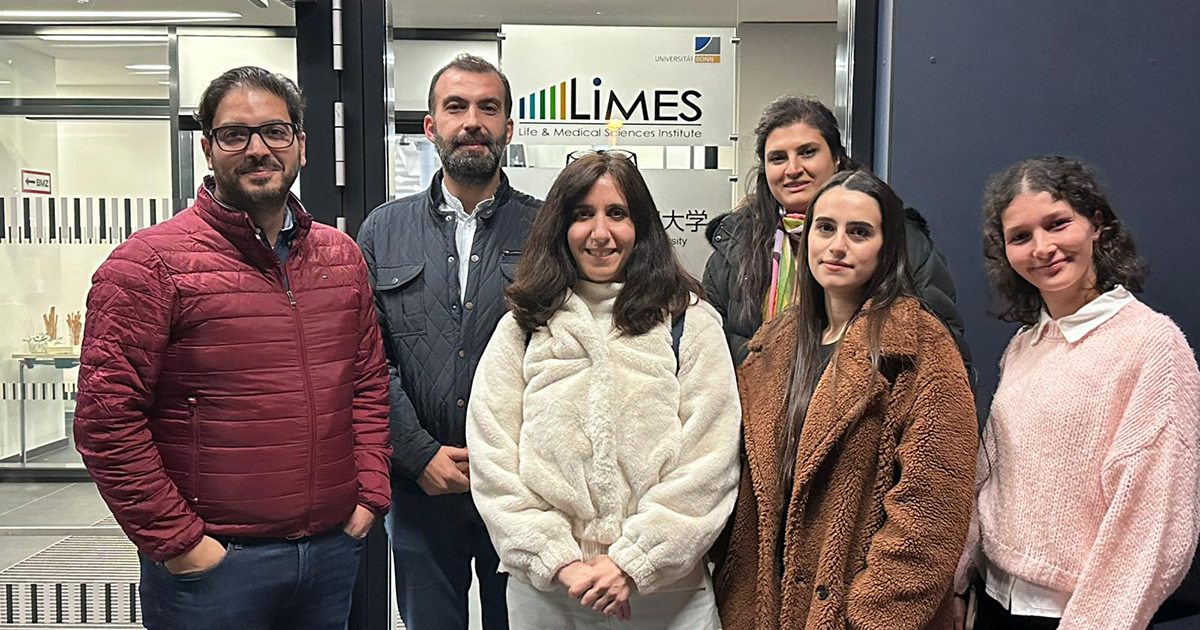
LAU faculty and students from the nutrition, computer science and medicine programs participated in collaborative events with German and Arab universities under a grant funded by the German Academic Exchange Service (DAAD) and implemented through the Strategic Arab-German Network for Affordable and Democratized AI in Healthcare (SANAD). The initiative is designed to promote inter-university partnerships, research, and innovative learning experiences centered on AI and healthcare.
The grant, through Ta’ziz (Arabic for strengthening) program by DAAD, was initiated and led by Dr. Shadi Albarqouni, professor of Computational Medical Imaging Research at the University of Bonn in collaboration with Dr. Hussein F. Hassan, professor of food science and technology at the School of Arts and Sciences’ Department of Nutrition and Food Science, Monia Najar, professor of computer science at the University of Tunis El Manar, and Bareen Havel, head of Cooperation and Coordination at Duhok Polytechnic University.
The initiative supports transnational partnerships among leading universities and research centers in Germany, Lebanon, Kurdistan Iraq and Tunisia to advance low-cost, human-centered AI solutions for medical imaging and health challenges.
Most recently, LAU faculty and students participated in two events through the SANAD grant, with the participation of the University of Tunis El Manar and Duhok Polytechnic University: The Summer School on Biomedical Imaging with Deep Learning (BILD) in Tunis and the Symposium on AI in Medicine & Food Science in Bonn.
“The events provided significant academic, professional, and institutional benefits,” and an opportunity for both LAU students and faculty to enhance their research skills, interdisciplinary knowledge, and international networks, thus fostering potential future collaborations and publications, said Dr. Hassan.
In December, nutrition graduate students Roa Echtay (BS ’24) and Hanin El Hajj (BS ’24) in the Combined Program in Nutrition and Dietetics and completing their internship at the LAU Medical Center-Rizk Hospital, shared the preliminary results from their theses at the symposium, while Dr. Hassan, Dr. Leila Issa, associate professor of mathematics, and Dr. Rana Rizk, assistant professor of nutrition, also presented on their research.
Echtay’s research aimed to assess whether foods marketed as gluten-free truly meet safety standards, due to the serious health implications for individuals suffering from celiac disease and gluten intolerance, she said. Her presentation focused on the study design, sampling strategy, laboratory methods, and research rationale.
“The topic generated strong interest, as many participants were surprised by the possibility of gluten presence in products labeled as gluten-free, highlighting the importance of food safety and accurate labeling,” she said.
Presenting her work to an international and regional audience strengthened her research communication skills and allowed her to receive valuable feedback.
“The symposium’s focus on artificial intelligence in medicine and food science was new to me and particularly insightful,” she said. “Learning about the potential applications of AI in healthcare and food systems expanded my perspective on emerging tools that may shape the future of medicine and nutrition.”
The experience was further enriched by her interactions with participants from different countries, including Tunisia and Iraq, “which fostered meaningful academic and cultural exchange,” she added.
In September, biology graduates Rawane Bahous (BS ’23) and Leen Echtay (BS ’22) and current medical students, participated in the five-day intensive Summer School on Biomedical Imaging with Deep Learning (BILD) organized by Albarqouni Lab at the University Hospital Bonn and the University of Bonn to support cross-border academic excellence and technological innovation.
BILD was also a collaborative effort between the Albarqouni Lab at the University Hospital Bonn and the University of Tunis El Manar, with the participation of LAU and Duhok Polytechnic University, offering students a unique learning and cross-cultural experience.
Students gained hands-on experience in cutting-edge AI applications and deep-learning techniques for medical imaging through lectures and collaborative case studies. They also engaged with peers and faculty from Germany, Lebanon, Iraq and Tunisia to develop practical skills in building and deploying AI models for real-world healthcare challenges.
“Bringing together diverse minds from Lebanon, Tunisia, and Germany shows that innovation thrives when we combine expertise across borders, disciplines, and cultures. This collaboration demonstrates how international partnerships can empower our students and faculty to explore the frontiers of AI in medicine and nutrition, translating cutting-edge research into real-world impact,” said Dr. Albarqouni.
LAU’s strategic priority to strengthen academic partnerships has helped build capacity for advanced AI-based research and facilitated the dissemination of expertise among students and faculty, placing the university at the forefront of integrating AI, healthcare, and nutrition sciences.
“We are proud to support initiatives that connect our students and faculty with leading international experts, fostering innovation and interdisciplinary research that advances both knowledge and real-world solutions,” said Dr. Haidar Harmanani, dean of the School of Arts and Sciences.


